Ghosted by Your 3PL? Why It’s Time for a Fresh Look at Your Fulfillment Partner

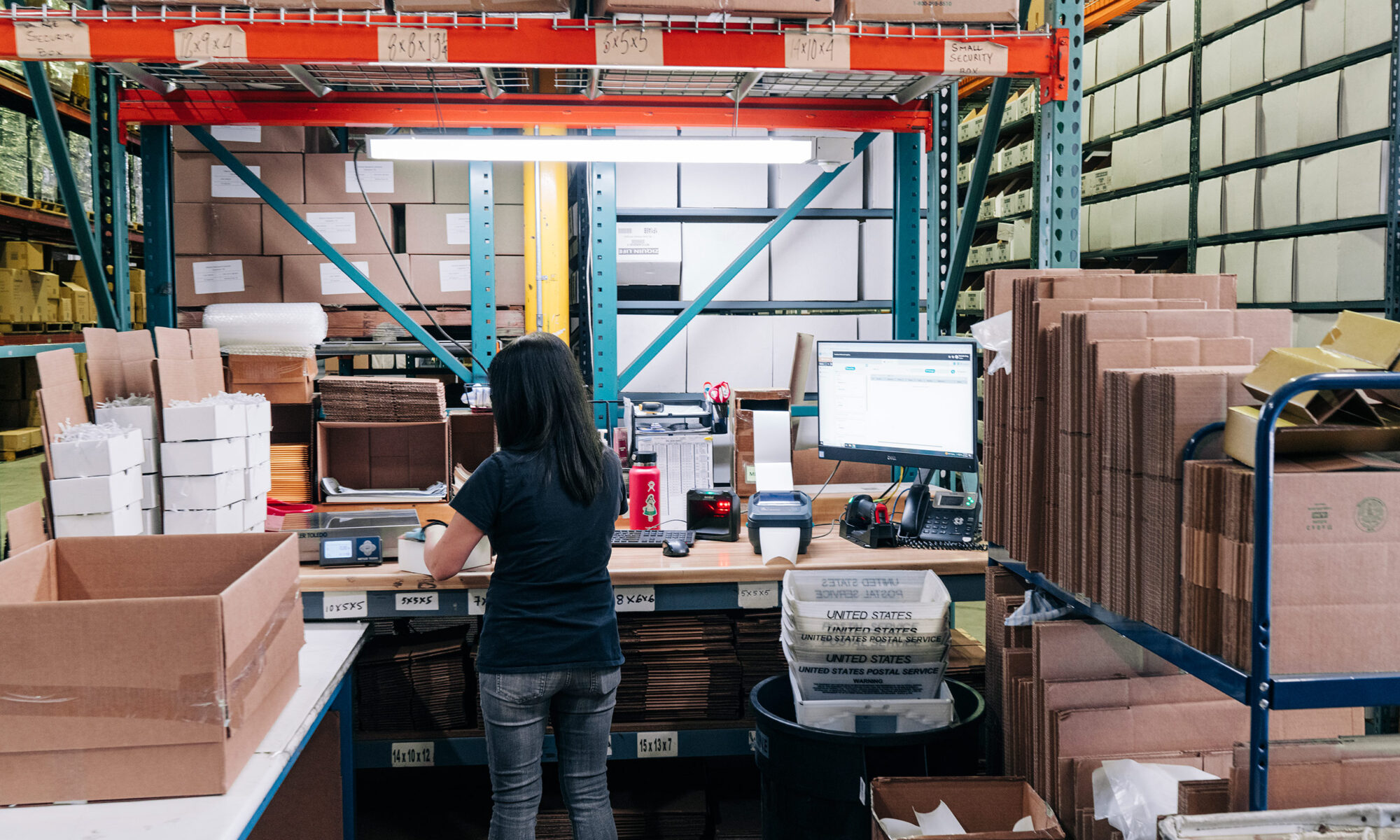
Medallion Warehouse Station for packing and shipping products

Let’s play a quick game of ecommerce matchmaking. Picture your current third-party logistics (3PL) provider. When you send them an urgent ticket about a mis-shipped order or an unexpected inventory discrepancy, what happens next?

Do you get an immediate, helpful response from a human being who actually knows your brand? Or do you get an automated response that says, “Thank you for contacting MegaCorp Fulfillment. Your ticket number is #847294. We will respond within 3 to 5 business days, or possibly never. Have a nice day!”?

If you are a medium-sized ecommerce business owner, running into a wall of silence from your logistics partner isn’t just mildly annoying—it’s actively killing your margins. You’ve outgrown the startup phase where you can pack boxes in your garage, but you aren’t a monolithic global conglomerate yet either. You occupy that crucial, fast-growing sweet spot where agility, speed, and real human communication are your primary competitive advantages.

If your fulfillment company is treating you like a barcode instead of a business partner, it’s time to stop settling for average logistics. It’s time to take a fresh, hard look at how your products are getting to your customers.

The Medium-Sized Business Trap: Caught in the 3PL Dead Zone

Medium-sized ecommerce brands often find themselves caught in a frustrating logistics dead zone. When you first started out, a small local warehouse or an app-based fulfillment service felt perfect. But as your order volume scaled, they ran out of shelf space, their software choked on your daily order influx, and their limited shipping lanes began driving your freight costs through the roof.

So, you took the leap to a massive, national 3PL. You expected corporate efficiency. Instead, you discovered that your thousands of monthly orders make you a tiny, easily ignored fish in a massive ocean of enterprise clients. When Amazon stock replenishment needs adjusting or a sudden TikTok spike requires fast action, you are forced to wait in a digital queue.

In ecommerce, a non-responsive fulfillment partner causes a devastating domino effect:

The Waiting Game:

A customer inputs an incorrect shipping address. You email your 3PL to fix it before the package leaves. Because they take 24 hours to reply, the box ships to the wrong address anyway. You pay for the return, you pay for the reshipment, and you earn a blistering 1-star review.

The Integration Blind Spot:

Your tech stack evolves. You want to integrate new shopping carts, expand into subscription boxes, or sell directly on custom boutique channels. But your giant 3PL’s software is rigid, outdated, or requires a five-figure custom development fee just to speak to your storefront.

The Inventory Disconnect:

If you don’t have real-time visibility across your entire inventory pipeline, you are either overselling items you don’t have or paying astronomical storage fees for dead stock that isn’t moving.

You shouldn’t have to choose between a tiny garage operation and a cold, faceless logistics giant. There is a third option: a responsive, national fulfillment partner that actually picks up the phone.

Enter Medallion Fulfillment & Logistics: The Responsive Alternative

At Medallion Fulfillment & Logistics, we have spent more than 32 years mastering the delicate balance between industrial-strength national infrastructure and high-touch, responsive customer care.

Our history tells the whole story. We are a classic American success story that began years ago in the Kent family garage. Today, we have scaled into a premier national enterprise, but we remain a family-owned business at heart. Because of those roots, we refuse to sacrifice the exceptional customer service, agility, and personalized responsiveness that got us here in the first place.

When you partner with Medallion, you aren’t assigned a generic support queue. You get a dedicated team of fulfillment experts who know your products, understand your business model, and adapt to your changing needs in real time. We treat your brand’s reputation with the exact same care we gave our very first clients back in the garage days.

Bi-Coastal Infrastructure with a Single, Unified Mind

For a medium-sized ecommerce brand, shipping everything out of a single central location means you are losing the delivery race. East Coast customers are waiting five days for West Coast packages, or vice versa, and you are eating the cost of high-zone shipping fees just to keep up with consumer expectations.

Medallion solves this elegantly with strategic, bi-coastal warehouse operations:

Our West Coast Hub:

Located in Los Angeles (Chatsworth, CA), placing you right next to the nation’s premier maritime gateways for rapid inventory receiving and lightning-fast West Coast distribution.

Our East Coast Hub:

Located in Boston (Franklin, MA), giving you immediate, cost-effective access to the dense, high-volume consumer markets across the entire Eastern United States.

By splitting your inventory strategically between LA and Boston, you instantly lower your average shipping zones. Your costs plummet, and your delivery times drop down to the fast turnaround windows your customers demand.

The best part? You don’t have to log into two separate, clunky databases to manage your inventory. Both our East and West Coast fulfillment facilities utilize a common software application.

This means you enjoy total, seamless transparency across your entire supply chain. You can check stock levels, track outbound shipments, and route orders to the optimal warehouse through a single, clean, intuitive dashboard.

Scalable Tech and Specialized Services Ready for Your Next Big Move

A truly responsive logistics partner doesn’t just reply to your emails quickly; they anticipate where your business is heading and build the infrastructure to support it. Whether you are running a streamlined direct-to-consumer store or managing a complex omnichannel brand, Medallion’s services are completely scalable and designed to adapt to your specific workflow.

Seamless Shopping Cart Integrations

Our innovative software integrates smoothly out of the box with the industry’s most popular third-party shopping carts and ecommerce platforms. No messy, broken workarounds—just clean, automated order processing that pushes data from your storefront to our warehouse floors instantly.

Specialized Program Flexibility

We know that modern ecommerce isn’t just about shipping standard brown boxes. We provide deeply specialized fulfillment tracks tailored to complex retail models:

  • Subscription Box Fulfillment: Precision kitting and assembly services to ensure your monthly subscription boxes roll out on time, perfectly organized, and visually stunning.
  • Clothing & Apparel Fulfillment: Specialized apparel handling to keep garments clean, wrinkle-free, and organized perfectly by size, style, and color variant.
  • Amazon Stock Warehouse Replenishment: Avoid Amazon’s punishing long-term storage fees by using Medallion as your primary storage buffer, feeding inventory into FBA centers seamlessly as needed.

The True Cost of Bad Logistics (And How to Fix It)

Many ecommerce founders stay with a unresponsive 3PL simply because they dread the perceived hassle of switching. They look at their monthly storage and pick-and-pack bills and think, *”Well, it’s not perfect, but it’s what we budgeted for.”*

But have you calculated the hidden costs of a slow, rigid provider? Consider the financial drain of:

• Long-zone shipping fees caused by a poorly positioned warehouse.

• Lost lifetime value (LTV) from angry customers who abandon your brand after a delayed or botched delivery.

• Your own internal team’s valuable hours wasted chasing down unhelpful customer service tickets.

Switching to a responsive partner isn’t a headache—it’s an instant upgrade to your bottom line. We make the transition incredibly straightforward, guiding you through the software onboarding and inventory transfer process without a single day of disrupted sales.

Stop Ghosting Your Growth. Let’s Talk.

Your business is growing, your marketing campaigns are hitting their stride, and your products deserve a fulfillment experience that matches your ambition. Stop settling for a 3PL relationship where you do all the giving and they do all the ignoring.

Let Medallion show you what modern, agile, and truly responsive fulfillment looks like. We will leverage our 32-plus years of experience, our dual hubs in LA and Boston, and our cutting-edge software integrations to cut your shipping costs, speed up your delivery times, and clear your plate so you can focus entirely on scaling your brand.

Don’t guess what your logistics should cost. Let’s look at the hard numbers together.

Ready to see the difference a responsive partner makes? Request a free price quote today to compare our scalable, bi-coastal rates directly against your current provider.

The Goldilocks Dilemma: Finding the Fulfillment Partner

Prepare for a winning ecommerce store strategy.

Let’s be honest for a second about fulfillment partners. You didn’t start your e-commerce business because you had a lifelong passion for corrugated cardboard, bubble wrap, or arguing with regional delivery drivers. You started it because you had a brilliant product, an untapped market, and a dream of building a business empire.

Yet, here you are. It’s midnight, your living room looks like a packing peanut factory exploded in it, and you’re currently trying to figure out if you can tape three small boxes together to make one large box without violating the laws of physics or the post office’s strict guidelines.

Welcome to the e-commerce growth ceiling. It’s the exact moment where your success becomes your logistical nightmare.

When your online store takes off, you quickly hit a crossroads. You need fulfillment help, but the options out there feel a lot like Goldilocks trying to find a place to sleep. On one hand, you have the massive, faceless tech giants who treat your inventory like a tiny drop in an ocean of barcodes. If you have a question, you get a support ticket and a prayer. On the other hand, you have local “mom-and-pop” garages that mean well but lack the technology, infrastructure, or geographic reach to scale with you when your TikTok video goes viral.

At Medallion Fulfillment & Logistics, we believe you shouldn’t have to choose between cutting-edge capability and actual human relationship. We’ve spent more than 32 years perfecting the art of being “just right”—large enough to give you a massive bi-coastal footprint, but nimble enough to know your name when you call.

Here is how a truly scalable, tailored fulfillment partner can rescue your sanity, protect your margins, and help you reclaim your living room.

The Bi-Coastal Advantage (Or: Why Your Customers Hate Waiting)

We live in an era of instant gratification. If a customer orders a sweater on Tuesday, their brain automatically assumes it should arrive by Thursday afternoon at the latest. If your inventory is sitting entirely in a single warehouse on one edge of the country, you are fighting an uphill battle against time, distance, and expensive shipping zones.

Medallion solves this with a strategic, dual-coast layout:

The West Coast Hub: Based right outside Los Angeles (Chatsworth, CA).

The East Coast Hub: Located right outside Boston (Franklin, MA).

Think of it as a pincer movement against slow shipping. By splitting your stock between our L.A. warehouse and Boston facilities, you instantly shrink the physical distance between your products and your customers.

The best part? Both warehouses run on a single, unified software application. You don’t have to learn two different systems or manage two separate vendors. You simply log in, see your entire inventory across both coasts in real-time, and let our system route orders seamlessly. Your shipping costs drop, your delivery times plummet, and your customers get that delightful “Wow, that was fast!” unboxing experience.

Real Scalability: From “Garage Start-up” to Amazon Heavyweight

The word “scalable” gets thrown around a lot in corporate brochures, usually right next to a picture of people high-fiving in an office. But what does scalability actually mean when you’re running an online store?

It means your fulfillment partner shouldn’t punish you for being small, nor should they break down when you get big.

We understand this deeply because we lived it. Medallion is an American success story that literally started in the Kent family garage decades ago. Today, we’re a national enterprise, but we’ve kept that family-business DNA. We know what it feels like to count every dollar and double-check every label.

Because of that heritage, we built specific Fulfillment for Startups programs. We don’t expect you to ship 10,000 units a month on day one. We want to help you get to 10,000 units a month. Our services scale dynamically: as your order volume grows, your operations expand smoothly within our walls without a hitch.

And if your growth strategy involves the retail heavyweight of the world, we have you covered there, too. Navigating Amazon’s strict fulfillment rules can feel like trying to solve a Rubik’s Cube blindfolded. One wrong label or late shipment, and you’re hit with chargebacks or a suspended listing. Medallion offers specialized Amazon Stock Warehouse Replenishment services. We store your bulk inventory affordably and feed it into Amazon’s network precisely when and how they require it, keeping your prime badge active without drowning you in Amazon’s high storage fees.

Tailored Means Tailored (No Cookie-Cutter Logistics)

Every e-commerce business likes to think it’s unique—and you actually are. Shipping a delicate silk dress requires a completely different touch than shipping a subscription box filled with heavy glass jars or a delicate piece of tech.

A lot of massive third-party logistics (3PL) providers try to force your unique business into their rigid, pre-molded box. If your product requires custom inserts, specific tissue paper folds, or specialized kitting, they either say “no” or charge you an absolute fortune.

We do things differently. Whether you need specialized Clothing Fulfillment (where apparel needs to arrive crisp, unwrinkled, and perfectly presented) or you run a Monthly Subscription Box business that requires a massive, coordinated “kitting” assembly line once a month, we tailor our workflow to fit your brand. Your fulfillment provider should be an invisible extension of your team, executing your brand experience exactly how you envisioned it.

The Tech Connects It All

Of course, custom care doesn’t mean manual labor and spreadsheets. You need a system that talks to your store while you sleep.

Our innovative software platform integrates seamlessly with the most popular modern third-party shopping carts. Whether you sell on Shopify, WooCommerce, Magento, or run a bustling TikTok or Etsy Shop, our technology plugs right in.

When a customer clicks “Buy Now” on your site, the order automatically flows directly to our picking queues in Boston or L.A. The tracking number flows right back to your customer. You don’t have to copy-paste data, manually upload CSV files, or play phone tag with the warehouse manager. It just works.

Reclaim Your Time to Focus on Growth

Every hour you spend packing a box, printing a shipping label, or tracking down a lost package is an hour you *aren’t* spending on marketing, product development, or talking to your community. You didn’t build a business to become an underpaid warehouse clerk.

By partnering with a 3PL that blends coast-to-coast infrastructure with personalized, family-business responsiveness, you aren’t just outsourcing your shipping—you’re buying back your time.

Let us handle the boxes, the software integrations, the bi-coastal routing, and the heavy lifting. You focus on making your brand unforgettable. Contact us today for a free price quote.

Is Your Ecommerce Traffic Down? Here’s How to Fix It Fast

Medallion Fulfillment & Logistics is a leader in ecommerce fulfillment.

You check your analytics dashboard, and your heart sinks. The numbers are red. The steady stream of visitors you relied on last quarter has turned into a trickle. For any business owner, a sudden drop in web traffic isn’t just a vanity metric problem—it’s a direct hit to your revenue and growth goals.

It’s a scenario we see often. You spend months building a beautiful online store and optimizing your products, only to see engagement stall. While organic growth is the holy grail, relying solely on it can leave you vulnerable to search engine whims and aggressive competitors.

If you’re wondering where your customers went, you aren’t alone. But waiting for them to come back isn’t a strategy. To regain control and drive consistent sales, you need to pivot from passive waiting to active acquisition. Here is why your traffic might be down and how paid ecommerce marketing can turn the tide.

Common Reasons for Declining Web Traffic

Before you can fix the problem, you have to diagnose it. Traffic drops rarely happen without a reason. Usually, it is a combination of external factors and internal gaps.

Algorithm Updates

Search engines like Google are constantly refining how they rank websites. A “core update” can happen overnight, shuffling search results and pushing your once-dominant product pages to page two or three. If your organic traffic plummeted on a specific date, an algorithm change is often the culprit.

Increased Competition

The barrier to entry for ecommerce is lower than ever. New competitors enter the market daily, bidding on the same keywords and targeting the same audience. If a competitor launches an aggressive ad campaign or undercuts your pricing, they can siphon off your traffic before it even reaches your site.

Seasonal Changes

Consumer behavior ebbs and flows. A swimsuit retailer naturally sees a dip in October, while a gift shop peaks in December. Failing to account for these natural cycles can make a normal seasonal lull feel like a crisis.

Technical and SEO Issues

Sometimes the call is coming from inside the house. Broken links, slow page load speeds, or accidental changes to your site’s structure can prevent search engines from crawling your pages correctly. If Google can’t read your site, it won’t show it to customers.

Search Generative Content and AI Overviews

The rise of search generative content (SGC) and artificial intelligence (AI) overviews is reshaping how information is presented in search engine results pages (SERPs). Tools like Google’s AI-generated summaries aim to provide users with immediate, synthesized answers to their queries, often before traditional organic results appear. While this offers convenience for users, it pushes valuable organic results further down the page, reducing visibility and click-through rates for businesses.

For business owners, this means adapting their SEO strategies to account for the growing presence of AI-driven content. Focusing on targeted keywords, optimizing for featured snippets, and incorporating high-quality, actionable information can help ensure your content remains competitive. Businesses also benefit from creating authoritative and value-rich content that AI overviews are more likely to reference directly. Staying proactive in this shifting landscape is crucial to maintaining a strong digital presence.

The Power of Paid Advertising

When organic traffic falters, paid advertising is the engine that gets you moving again. Unlike SEO, which takes months to build, paid ads offer a faucet you can turn on immediately.

For ecommerce businesses, the benefits are clear:

• Immediate Visibility: You can appear at the top of search results or in social feeds within hours of launching a campaign.

• Precision Targeting: You don’t have to wait for customers to find you. You can target specific demographics, interests, and buying behaviors.

• Measurable Results: Every dollar is tracked. You know exactly which ads are driving sales and what your return on investment (ROI) is.

• Scalability: Once you find a winning formula, you can increase your budget to scale traffic instantly which is perfect for when you have excess inventory to move.

Effective Paid Advertising Strategies

Not all ads are created equal. To get the best return on your ad spend, you need to choose the right channels for your products.

Google Shopping and Search Ads

For ecommerce, Google is often the highest-converting channel because it captures high-intent buyers.

• Google Shopping: These are the visual product listings that appear at the top of search results. They display your product image, price, and store name immediately. Success here relies on a healthy product feed – ensuring attributes like [price], [availability], and [image_link] are accurate in your Merchant Center.

• Search Ads: These text-based ads target specific keywords. If you sell “organic dog treats,” you can bid to appear when someone types that exact phrase.

Social Media Advertising

Platforms like Facebook and Instagram are excellent for generating demand. Tools like Meta’s Advantage+ Shopping campaigns use machine learning to automate ad delivery, showing your catalog to the people most likely to buy, even if they haven’t heard of your brand yet.

Retargeting Campaigns

Most visitors won’t buy on their first visit. Retargeting allows you to show ads to people who viewed a product but left without purchasing. These ads serve as a gentle reminder, often bringing customers back to complete the checkout process.

Optimizing Your Paid Advertising Campaigns

Throwing money at Google or Facebook isn’t a guaranteed fix. In fact, without the proper know how, paid ads can quickly become a money pit.

Effective management involves:

• Negative Keywords: Telling Google where not to show your ads (e.g., preventing your premium product from showing up for “cheap” or “free” search terms) to save budget.

• Audience Refinement: Constantly tweaking who sees your ads to improve conversion rates.

Because the landscape changes so fast—with new features like Performance Max and Advantage+ rolling out regularly – many business owners find it more cost-effective to partner with a dedicated marketing expert rather than trying to DIY their ad strategy.

Working With Medallion Fulfillment for Order Fulfillment

Driving traffic is only the first half of the equation. Once those orders start rolling in from your new ad campaigns, you need a backend that can handle the volume.

At Medallion Fulfillment & Logistics, we know that marketing and operations go hand-in-hand. There is nothing worse than paying for a customer only to lose them due to slow shipping or inventory errors. We provide the scalable ecommerce order fulfillment infrastructure you need to support aggressive growth.

Furthermore, we believe in a holistic approach to business growth. We encourage our clients to work with specialized partners who can handle the complexities of paid ecommerce marketing. By aligning your order fulfillment logistics with a dedicated marketing team, you ensure that your business is firing on all cylinders—generating sales on the front end and delivering five-star experiences on the back end.

Turn Traffic Drops into Sales Spikes

A drop in traffic is a wake-up call, not a death sentence. By diversifying your strategy and integrating paid advertising, you can insulate your business from algorithm updates and seasonal slumps.

Don’t let your inventory sit stagnant while you wait for organic rankings to recover. Take control of your traffic today.

If you are ready to scale your operations to meet renewed demand, contact us at Medallion Fulfillment & Logistics. Let’s discuss how our innovative, cost-effective solutions can support your growth journey.

When Bots Fail: Why a You Need a Family Owned 3PL

Quick answer: A family-owned 3PL provides superior customer service by replacing automated chatbots and slow ticketing systems with direct access to human logistics experts.

Choose a personalized fulfillment warehouse over a tech-first provider if you want rapid issue resolution, proactive supply chain management, and dedicated account managers who actively care about your business’s success.

As a business owner, you dedicate countless hours to developing products, marketing your brand, and generating sales. Yet, when it comes time to ship those orders to your customers, many companies hand their entire operation over to a faceless dashboard. You log in, you see your inventory levels, and everything looks pristine. But the moment a customer enters the wrong shipping address, the polished facade crumbles.

You quickly find yourself trapped in the frustration of modern logistics: shouting “representative” at an automated phone tree.

Customer satisfaction relies on successful product delivery. Relying on an automated third-party logistics (3PL) provider often leaves your business vulnerable to delays, generic responses, and frustrated buyers.

This post explains why working with a family-owned fulfillment warehouse provides a massive operational advantage, ensuring your supply chain remains resilient, responsive, and ready for growth.

Why do venture-backed tech 3PLs struggle with customer support?

Venture-backed tech 3PLs often prioritize rapid scaling and software development over actual warehouse operations. These organizations look incredibly sleek online. They offer colorful dashboards and promise a hands-off approach to fulfillment. However, this tech-heavy approach creates a significant barrier when things go wrong. These companies routinely isolate their clients behind automated chat bots and slow email ticketing systems.

When a critical error occurs, business owners cannot simply pick up the phone and speak to the person moving their pallets. Instead, you submit a ticket and wait 48 hours for a generic reply.

Why can’t an algorithm solve a critical shipping crisis before Black Friday?

During high-volume periods like Black Friday, supply chains experience rapid, unpredictable changes. A sudden weather delay or a massive spike in unexpected orders requires immediate strategic decisions. An algorithm processes data based on past programming. It cannot negotiate a last-minute pickup with a freight carrier, nor can it physically inspect a pallet of fragile goods that arrived damaged.

Algorithms lack the contextual awareness needed to execute creative, on-the-fly problem-solving. Choose a human-led fulfillment warehouse if your business experiences seasonal spikes that require rapid operational pivots.

Why is human intervention critical in modern logistics?

Logistics is a deeply human business. The inventory sitting on warehouse racks is not just a collection of data points on a screen. That inventory represents your capital, your livelihood, and your commitment to your customers.

When a fulfillment center treats your products purely as data, accountability vanishes. Human workers who understand the value of your goods take ownership of the process. They notice when a box feels too light or when a shipping label looks illegible. These small, human observations prevent costly returns and protect your brand’s reputation.

What is the Medallion Fulfillment & Logistics difference?

As a family-owned and operated business, Medallion Fulfillment & Logistics prioritizes accessibility and clear communication. We understand that your success dictates our success. Therefore, we remove the barriers between your business and your inventory.

The Medallion promise guarantees: Real people, direct phone lines, and names you actually know. When you call our facility, a real logistics expert answers the phone. We do not force you through a digital maze to get a simple answer about a pending shipment.

How does a dedicated account manager act as an extension of your own operations team?

When you partner with Medallion Fulfillment & Logistics, we assign a dedicated account manager to your business. This professional learns your specific packaging requirements, your preferred shipping methods, and your seasonal volume trends. Because your account manager understands your unique goals, they proactively identify ways to keep shipping costs down while providing superior service to your customers. You gain an experienced operations director without the overhead of hiring an in-house employee.

How does real-world agility outperform automated warehouse systems?

Agility defines successful order fulfillment. Consider a scenario where an eCommerce shopper accidentally orders the wrong item size, realizes the mistake 10 minutes later, and emails your support team to change it.

If you use a venture-backed tech 3PL, your only option is to submit an online ticket. By the time the system routes that ticket to the floor, an automated conveyor system has already processed, packed, and shipped the incorrect item.

If you partner with Medallion Fulfillment & Logistics, you simply call your account manager. Because we have real people on the floor, our team can physically walk over to the packing station, pull the product off the line, and swap the size before the carrier arrives. That real-world agility saves you the cost of return shipping and guarantees a positive customer experience.

Why does building long-term business relationships lead to better supply chain resilience?

Supply chains face constant disruptions from carrier rate hikes, material shortages, and regional delays. A fulfillment warehouse that treats you as a long-term partner actively helps you navigate these challenges. We leverage our established relationships with freight carriers to negotiate better rates on your behalf. We advise you on optimal inventory distribution based on decades of hands-on experience. This collaborative approach builds a resilient supply chain capable of withstanding industry turbulence.

Partner with a fulfillment warehouse that knows your business

Your business isn’t an algorithm, so why settle for robotic support? Stop settling for automated responses and start treating your fulfillment strategy as a competitive advantage. Partner with a team that knows your name and cares about your success.

Get a Free Personalized Quote Today!

Frequently Asked Questions

What are the risks of using an automated tech 3PL for eCommerce fulfillment?

Automated tech 3PLs heavily rely on software to manage client communications, which often leads to delayed issue resolution. If a shipping emergency occurs, clients must submit digital tickets rather than calling the warehouse directly. This lack of direct access can result in misrouted packages, increased return rates, and damaged customer relationships.

Who benefits most from a family-owned fulfillment warehouse?

Small to medium-sized business owners who require personalized support and flexible operations benefit most from a family-owned 3PL. Choose a family-owned provider like Medallion Fulfillment & Logistics if you value direct communication, customized packaging processes, and proactive supply chain guidance over a standardized, software-only approach.

How quickly can a human 3PL team resolve shipping errors?

A human-led 3PL team can resolve shipping errors immediately upon notification. Because clients have direct phone access to dedicated account managers, warehouse staff can physically intercept incorrect orders on the packing floor before they are handed off to shipping carriers.

How much does a customized 3PL service cost compared to automated platforms?

Customized 3PL services often provide a stronger return on investment (ROI) by reducing costly shipping errors and minimizing return logistics. While automated platforms may advertise lower initial software fees, the lack of operational oversight frequently leads to hidden costs via mis-shipments and poor customer retention. Medallion Fulfillment & Logistics offers flexible, competitive pricing customized to fit your specific order volume and storage needs.

Ready to get started? Get a free customized quote today.

Cracking the Retail Code: How to Handle B2B and Big-Box Distribution Without Penalties

Quick answer: To handle big-box distribution without penalties, businesses must strictly follow specific retailer routing guides detailing EDI integration, pallet sizing, and delivery windows.

Partnering with an experienced fulfillment warehouse like Medallion Fulfillment & Logistics ensures compliance, eliminates costly chargebacks, and seamlessly integrates B2B shipments with direct-to-consumer e-commerce orders.

Landing a contract with a major retailer or big-box store feels like a massive victory for any growing brand. Securing shelf space in stores like Target, Walmart, or Amazon provides massive brand exposure and significant sales growth. You have successfully created a product that consumers want, and now the retail giants want to stock it.

However, the celebration usually pauses the moment the logistics paperwork arrives. Fulfilling orders for major retailers introduces an entirely new layer of complexity compared to standard e-commerce shipping. Big-box stores enforce strict rules on exactly how products must arrive at their distribution centers. If your company fails to follow these rules, the retailer issues financial penalties known as chargebacks, which quickly consume your profit margins and damage your vendor scorecard.

You need a clear strategy to manage these complex logistical requirements. This guide explains how to navigate routing guide compliance, avoid expensive penalties, and set your business up for sustainable wholesale success. Understanding these core concepts is essential for growth:

  • The complexity of “routing guides” when selling to Target, Walmart, or Amazon.
  • Why a single labeling mistake can lead to massive chargebacks and lost revenue.
  • The difference between high-volume B2B shipping and individual B2C e-commerce orders.
  • How Medallion’s experienced team ensures 100% compliance with major retail rules.
  • Expanding your brand from online-only to a true omni-channel powerhouse.

What makes retail routing guides so difficult to follow?

Retailers use routing guides to mandate exactly how suppliers must prepare and deliver shipments. These manuals can be hundreds of pages long, outlining precise requirements for carton labels, pallet configurations, Bill of Lading (BOL) formatting, and electronic communication.

Target, Walmart, and Amazon process millions of items daily. They rely on highly automated distribution centers to move this inventory efficiently. If your pallet arrives with the wrong dimensions or a missing barcode, their automated systems cannot process it. The retailer must then step in manually. To recoup their labor costs, they pass those expenses back to you in the form of a chargeback.

Choose an in-house logistics model if your company possesses a dedicated compliance department to read and enforce these manuals. Choose an experienced fulfillment warehouse if you want to avoid the overhead of a compliance team while maintaining perfect vendor scorecards.

Why do specific pallet sizing and delivery windows matter?

Every retailer has specific pallet sizing requirements to fit their particular racking systems. If you send a pallet that is two inches too tall, the receiving dock will likely reject the shipment entirely.

Furthermore, retailers enforce strict delivery windows. Your shipment must arrive on a highly specific date. Arriving a day early causes dock congestion, while arriving a day late causes out-of-stock issues on the retail floor. Both scenarios result in severe financial penalties.

How does EDI integration affect compliance?

Electronic Data Interchange (EDI) is the standard method for exchanging business documents between companies. Big-box retailers require EDI integration to receive purchase orders, send advance shipping notices (ASNs), and process invoices. Manual data entry is rarely allowed. Failing to transmit an ASN before the truck arrives at the retailer’s dock is a direct violation of the routing guide, leading to automatic chargebacks.

Why do single labeling mistakes lead to lost revenue?

The difference between high-volume B2B shipping and individual B2C e-commerce orders lies in the financial stakes of a single error. In a direct-to-consumer (B2C) model, printing a shipping label slightly crooked rarely matters as long as the carrier can scan it.

In business-to-business (B2B) shipping, a single labeling mistake can lead to massive chargebacks. Retail routing guides dictate the exact placement of GS1-128 barcodes on the outside of every carton. If a label is placed on the top of the box instead of the side, or if the barcode is wrinkled, the retailer’s automated conveyor belts cannot read it. A minor penalty per incorrectly labeled carton across a high-volume shipment can instantly wipe out thousands of dollars of your revenue.

How can an experienced fulfillment warehouse prevent retail chargebacks?

Managing these strict requirements requires dedicated expertise. Medallion Fulfillment & Logistics has spent decades mastering these complex compliance laws so our clients do not have to. As a family-owned business, we understand the hard work you have invested in growing your brand.

Our team actively manages routing guide updates across major retailers. When a major retailer changes their label placement rules, our warehouse management system updates immediately to reflect the new standard. Medallion’s experienced team ensures 100% compliance with major retail rules by implementing multi-step quality control audits on every outbound B2B shipment. We build the pallets to exact specifications, apply labels precisely, and schedule freight carriers to meet tight delivery windows.

How does seamless integration support an omni-channel strategy?

Expanding your brand from online-only to a true omni-channel powerhouse requires unified inventory management. You cannot afford to segregate your stock into separate warehouses for wholesale and direct-to-consumer orders. Splitting inventory ties up your capital and leads to stockouts in one channel while the other sits on excess product.

Medallion Fulfillment & Logistics bridges the gap between these different sales channels. We provide seamless integration so you can fulfill Shopify orders and Amazon FBA/B2B shipments from the exact same inventory pool. Our technology connects directly with your shopping carts and wholesale EDI systems. When a customer buys a single item on your website, our team picks and packs it immediately. When Target orders ten pallets of that same item, we route the inventory accordingly.

This unified approach gives you complete visibility over your stock levels, empowering you to make accurate purchasing decisions and maximize your sales potential across every platform.

Are you ready to take your brand to the big leagues?

Scaling into wholesale distribution is a monumental step for your business. The potential for revenue growth is tremendous, provided you can navigate the logistical hurdles smoothly.

Don’t let strict retail guidelines hold your brand back from the big leagues. Let Medallion handle the compliance paperwork while you celebrate the sales. Our dedicated team is ready to streamline your operations, protect your profit margins, and help your brand thrive in the retail market.

[Get a Free B2B Fulfillment Quote Now]

Frequently Asked Questions about B2B Fulfillment

What are retail routing guides?

Retail routing guides are comprehensive instruction manuals provided by major retailers to their suppliers. They dictate the exact rules for packaging, labeling, palletizing, and shipping products to the retailer’s distribution centers to ensure efficient processing.

How do chargebacks impact business profitability?

Chargebacks are financial penalties issued by retailers when suppliers violate routing guide rules. These fees are deducted directly from the supplier’s invoice, which significantly reduces the overall profit margin of the wholesale order.

Can Medallion Fulfillment & Logistics handle both B2B and B2C orders?

Yes. Medallion Fulfillment & Logistics manages both direct-to-consumer e-commerce fulfillment and complex wholesale B2B distribution from a single inventory pool, allowing businesses to efficiently operate across multiple sales channels.

What is the difference between B2B and B2C fulfillment?

B2C fulfillment involves shipping individual items directly to consumers quickly and accurately. B2B fulfillment requires shipping large volumes of products on pallets to retailers, which demands strict adherence to complex routing guides and scheduled delivery windows.

Why is EDI integration necessary for big-box retail?

EDI (Electronic Data Interchange) allows the secure, automated transfer of essential business documents like purchase orders and shipping notices. Major retailers require EDI integration to eliminate manual data entry errors and streamline the receiving process at their highly automated facilities.

Contact us today to get a custom price quote for services.