
Quick answer: To handle big-box distribution without penalties, businesses must strictly follow specific retailer routing guides detailing EDI integration, pallet sizing, and delivery windows.
Partnering with an experienced fulfillment warehouse like Medallion Fulfillment & Logistics ensures compliance, eliminates costly chargebacks, and seamlessly integrates B2B shipments with direct-to-consumer e-commerce orders.
Landing a contract with a major retailer or big-box store feels like a massive victory for any growing brand. Securing shelf space in stores like Target, Walmart, or Amazon provides massive brand exposure and significant sales growth. You have successfully created a product that consumers want, and now the retail giants want to stock it.
However, the celebration usually pauses the moment the logistics paperwork arrives. Fulfilling orders for major retailers introduces an entirely new layer of complexity compared to standard e-commerce shipping. Big-box stores enforce strict rules on exactly how products must arrive at their distribution centers. If your company fails to follow these rules, the retailer issues financial penalties known as chargebacks, which quickly consume your profit margins and damage your vendor scorecard.
You need a clear strategy to manage these complex logistical requirements. This guide explains how to navigate routing guide compliance, avoid expensive penalties, and set your business up for sustainable wholesale success. Understanding these core concepts is essential for growth:
- The complexity of “routing guides” when selling to Target, Walmart, or Amazon.
- Why a single labeling mistake can lead to massive chargebacks and lost revenue.
- The difference between high-volume B2B shipping and individual B2C e-commerce orders.
- How Medallion’s experienced team ensures 100% compliance with major retail rules.
- Expanding your brand from online-only to a true omni-channel powerhouse.
What makes retail routing guides so difficult to follow?
Retailers use routing guides to mandate exactly how suppliers must prepare and deliver shipments. These manuals can be hundreds of pages long, outlining precise requirements for carton labels, pallet configurations, Bill of Lading (BOL) formatting, and electronic communication.
Target, Walmart, and Amazon process millions of items daily. They rely on highly automated distribution centers to move this inventory efficiently. If your pallet arrives with the wrong dimensions or a missing barcode, their automated systems cannot process it. The retailer must then step in manually. To recoup their labor costs, they pass those expenses back to you in the form of a chargeback.
Choose an in-house logistics model if your company possesses a dedicated compliance department to read and enforce these manuals. Choose an experienced fulfillment warehouse if you want to avoid the overhead of a compliance team while maintaining perfect vendor scorecards.
Why do specific pallet sizing and delivery windows matter?
Every retailer has specific pallet sizing requirements to fit their particular racking systems. If you send a pallet that is two inches too tall, the receiving dock will likely reject the shipment entirely.
Furthermore, retailers enforce strict delivery windows. Your shipment must arrive on a highly specific date. Arriving a day early causes dock congestion, while arriving a day late causes out-of-stock issues on the retail floor. Both scenarios result in severe financial penalties.
How does EDI integration affect compliance?
Electronic Data Interchange (EDI) is the standard method for exchanging business documents between companies. Big-box retailers require EDI integration to receive purchase orders, send advance shipping notices (ASNs), and process invoices. Manual data entry is rarely allowed. Failing to transmit an ASN before the truck arrives at the retailer’s dock is a direct violation of the routing guide, leading to automatic chargebacks.
Why do single labeling mistakes lead to lost revenue?
The difference between high-volume B2B shipping and individual B2C e-commerce orders lies in the financial stakes of a single error. In a direct-to-consumer (B2C) model, printing a shipping label slightly crooked rarely matters as long as the carrier can scan it.
In business-to-business (B2B) shipping, a single labeling mistake can lead to massive chargebacks. Retail routing guides dictate the exact placement of GS1-128 barcodes on the outside of every carton. If a label is placed on the top of the box instead of the side, or if the barcode is wrinkled, the retailer’s automated conveyor belts cannot read it. A minor penalty per incorrectly labeled carton across a high-volume shipment can instantly wipe out thousands of dollars of your revenue.
How can an experienced fulfillment warehouse prevent retail chargebacks?
Managing these strict requirements requires dedicated expertise. Medallion Fulfillment & Logistics has spent decades mastering these complex compliance laws so our clients do not have to. As a family-owned business, we understand the hard work you have invested in growing your brand.
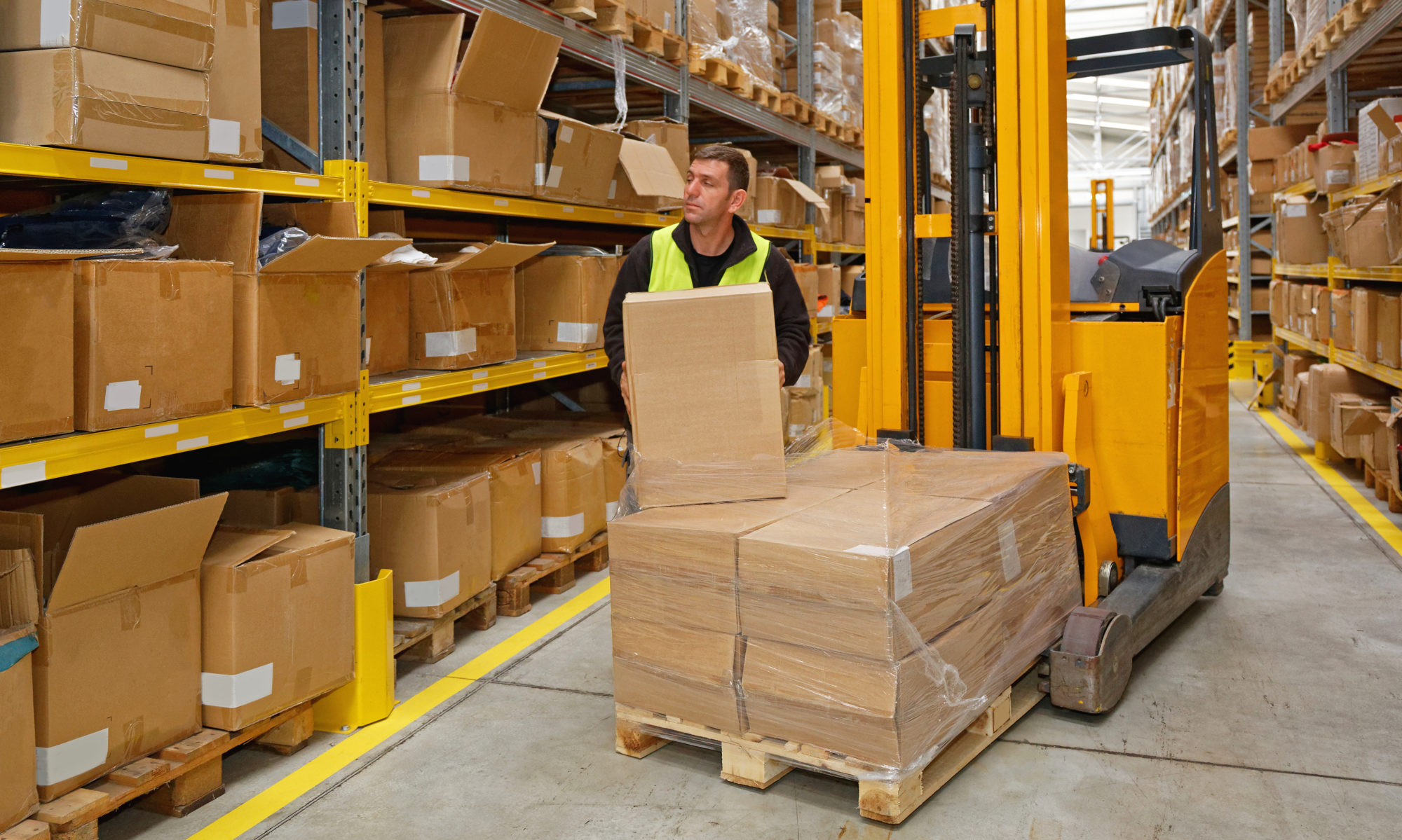
Our team actively manages routing guide updates across major retailers. When a major retailer changes their label placement rules, our warehouse management system updates immediately to reflect the new standard. Medallion’s experienced team ensures 100% compliance with major retail rules by implementing multi-step quality control audits on every outbound B2B shipment. We build the pallets to exact specifications, apply labels precisely, and schedule freight carriers to meet tight delivery windows.
How does seamless integration support an omni-channel strategy?
Expanding your brand from online-only to a true omni-channel powerhouse requires unified inventory management. You cannot afford to segregate your stock into separate warehouses for wholesale and direct-to-consumer orders. Splitting inventory ties up your capital and leads to stockouts in one channel while the other sits on excess product.
Medallion Fulfillment & Logistics bridges the gap between these different sales channels. We provide seamless integration so you can fulfill Shopify orders and Amazon FBA/B2B shipments from the exact same inventory pool. Our technology connects directly with your shopping carts and wholesale EDI systems. When a customer buys a single item on your website, our team picks and packs it immediately. When Target orders ten pallets of that same item, we route the inventory accordingly.
This unified approach gives you complete visibility over your stock levels, empowering you to make accurate purchasing decisions and maximize your sales potential across every platform.
Are you ready to take your brand to the big leagues?
Scaling into wholesale distribution is a monumental step for your business. The potential for revenue growth is tremendous, provided you can navigate the logistical hurdles smoothly.
Don’t let strict retail guidelines hold your brand back from the big leagues. Let Medallion handle the compliance paperwork while you celebrate the sales. Our dedicated team is ready to streamline your operations, protect your profit margins, and help your brand thrive in the retail market.
[Get a Free B2B Fulfillment Quote Now]
Frequently Asked Questions about B2B Fulfillment
What are retail routing guides?
Retail routing guides are comprehensive instruction manuals provided by major retailers to their suppliers. They dictate the exact rules for packaging, labeling, palletizing, and shipping products to the retailer’s distribution centers to ensure efficient processing.
How do chargebacks impact business profitability?
Chargebacks are financial penalties issued by retailers when suppliers violate routing guide rules. These fees are deducted directly from the supplier’s invoice, which significantly reduces the overall profit margin of the wholesale order.
Can Medallion Fulfillment & Logistics handle both B2B and B2C orders?
Yes. Medallion Fulfillment & Logistics manages both direct-to-consumer e-commerce fulfillment and complex wholesale B2B distribution from a single inventory pool, allowing businesses to efficiently operate across multiple sales channels.
What is the difference between B2B and B2C fulfillment?
B2C fulfillment involves shipping individual items directly to consumers quickly and accurately. B2B fulfillment requires shipping large volumes of products on pallets to retailers, which demands strict adherence to complex routing guides and scheduled delivery windows.
Why is EDI integration necessary for big-box retail?
EDI (Electronic Data Interchange) allows the secure, automated transfer of essential business documents like purchase orders and shipping notices. Major retailers require EDI integration to eliminate manual data entry errors and streamline the receiving process at their highly automated facilities.