New 2022 Rates for USPS, UPS, and FedEX

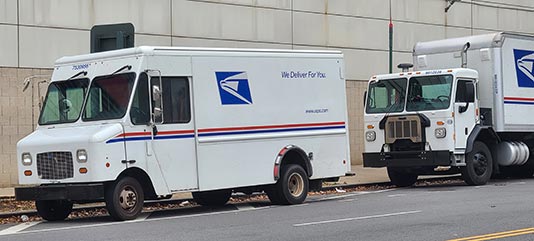
USPS Vehicle in New York City

Shipping in 2022 just got a tad more expensive starting as early as January 9, 2022. The United States Postal Service (USPS), United Parcel Service (UPS), and FedEX have all announced new rates for 2022. We’ve summarized the highlights below and have linked to the various websites and announcements if you want to do a deep dive into package sizes and time sensitive shipping updates.

United States Postal Service (USPS)

Still awaiting final price approval, but scheduled to take effect on January 9, 2022, the USPS expects to raise prices about 3.1% for Priority Mail and Priority Mail Express. See all the details at the USPS website.

Shipping for domestic Priority Mail Flat Rate packages will be also higher. See the summary table with the expected updates below.

Product Current Changed
Small Flat-Rate Box $8.45 $9.45
Medium Flat-Rate Box $15.50 $16.10
Large Flat-Rate Box $21.90 $16.10
APO/FPO Large Flat-Rate Box $20.40 $20.00
Regular Flat-Rate Envelope $7.95 $8.95
Legal Flat-Rate Envelope $8.25 $9.25
Padded Flat-Rate Envelope $8.55 $9.65

Although USPS published increase is an average of 3.1%, Shipware.com predicts that most shippers instead will see a rate increase of 5 to 8%.

“The announced average price change for Priority Mail is 3.1%, however, most shippers will realize a 4.9% increase (1-5 lbs), while ecommerce prices will increase an average of 6-8%.” Read the full article to check your impact.

United Parcel Service (UPS)

Bucking the trend UPS’ price rate increase takes effect just after the Christmas holiday on December 26, 2021. The rate increase will be one of the largest in UPS’ history. Expect a 5.9% average rate increase plus a hefty Fuel Surcharge.

Large package shippers will get hit again with a higher than average rate increase. Shipware.com say, “The large package surcharge will increase within a range of 8% to 16.7% and the additional handling charge for weight and dimensions will increase from 5.2% to 13.9% depending on zone.” Read the full article to check your impact.

For regular shippers the Fuel Surcharge is added to your weekly shipping statement. UPS describes the surcharge:

“UPS uses an index-based surcharge that is adjusted weekly. Changes to the surcharge will be effective on Monday of each week. The surcharge will be based on the National U.S. Average On Highway Diesel Fuel Price as reported by the U.S. Energy Information Administration (EIA) for the week that is two weeks prior to the adjustment, rounded to the nearest cent.”

The posted sample grid show a surcharge of 9.2% to 12.75% on the UPS website page for reference Your shipping may also be affected by Peak Surcharges for shipping into the US from overseas. View the table. Visit the Shipware.com website for a good summary of all the rate increases for UPS to get a high level overview.

FedEX

FedEx will increase shipping prices on January 3, 2022. A whopping 5.9% average increase is expected. with Fuel Surcharge increases to be factored in as well. This is the largest increase for FedEx in eight years. Most shippers will feel more than a 5.9% impact.

Additional information from the FedEx website show additional increases that will impact shipping costs in January.

• Effective Jan. 17, 2022, FedEx Freight will introduce a No Shipment Tendered surcharge that applies when a pickup is performed and no shipment is tendered to the carrier.

• Effective Jan. 17, 2022, the International Out-of-Delivery-Area Surcharge and International Out-of-Pickup-Area Surcharge rates will be determined based on the corresponding tier of the ZIP code, postal code, or city of the shipment’s origin and/or destination location for International Express Freight and Parcel services.

• Effective Jan. 17, 2022, a Delivery and Returns Surcharge will be assessed on packages that are delivered or returned using FedEx Ground Economy services.

• Effective Jan. 24, 2022, the Additional Handling Surcharge and Oversize Charge rates for U.S. Express Package Services and U.S. Ground Services will be determined based on the shipment’s zone”

You can read the full rate change notice on FedEx for more information. Or preview the rates now in a PDF from the FedEx website.

Shipware.com says this about the FedEx rate increase: “This is the first time since 2013 that the average parcel increase is greater than 4.9%.” For a high level summary of the new FedEX rates read the full article.

Rates May Change, But Medallion’s Customer-Focused Service Does Not

Medallion Fulfillment & Logistics knows that increases in shipping costs squeeze your bottom-line. You want to get value from the services you receive and keep your customers happy and loyal. Medallion understands this as your 3PL service provider.

Rest assured we do all we can do to keep our costs low and our prices affordable to boost your bottom-line.

Creating Your Own eCommerce Empire Means Expanding Beyond Amazon

eCommerce Tips

As an eCommerce vendor, it may seem like it’s Amazon’s world and we just live in it. But you didn’t become an entrepreneur just to play by someone else’s rules. Use your relationship with Amazon as a springboard to building your own eCommerce empire.

Rented vs. Owned Platforms

Just as with brick-and-mortar businesses, online vendors have the choice of rented or owned storefronts. Rented platforms include Amazon, Facebook, and other third-party options, while owned platforms are created and operated exclusively by the vendor. An owned platform would be your own ecommerce website.

Of course, both types have their pros and cons. Let’s look at the different elements of eCommerce platforms and how they apply to your business.

Range

This one is a no-brainer. Amazon has a built-in user base that’s second to none. New eCommerce retailers can quickly jump-start their business by tapping into Amazon’s ready-made customer base.

But as your business grows, this benefit can become a drawback. With Amazon controlling all communication between you and the buyers, you have no opportunity to nurture the customer relationships that are key to building sales and developing customer loyalty.

Cost

Again, for a start-up, there’s a financial advantage to using Amazon’s platform. You can bypass the expense of designing and maintaining a digital storefront and invest your funds in product, marketing or other areas that may need it.

If time is money, Amazon’s platform also provides savings in labor. There’s no need to divide your energies between operating your storefront and handling other business activities.

Eventually, these savings become offset by the increased fees you pay as your sales go up. Loss of repeat business is an indirect cost, but one that can ultimately add up even more.

Competition

This is one of the bigger disadvantages of Amazon’s size. Their doors are open to just about anyone, so you’ll often find yourself going up against multiple retailers offering similar or even the same products.

vAmazon does have tools to help you promote your products, but they’re not easy. Prime positioning in the Buy Box or Merchant Offers List is awarded by rankings based on pricing, merchant history, customer reviews and other factors. In essence, it’s a catch-22: to gain one of these spots, you must beat the competition you’re trying to overcome in the first place.

When you’re operating from an owned platform, your products have the spotlight all to themselves. When you get visitors to your website or mobile app, you know they’ve come because they’re interested buyers.

Shipping

Once your product has been sold, Fulfillment by Amazon handles the shipping end of the transaction. You send your products to one of Amazon’s fulfillment centers, where orders are shipped out to customers.

A time-saver? Absolutely. But one that comes with a lot of strings attached. For example, merchants sometimes find a discrepancy between the actual cost of shipping an order and the amount reimbursed by Amazon.

In addition, Fulfillment by Amazon has stringent requirements for the procedures used to package and ship products to their centers. Failure to comply can result in penalties ranging from additional charges to refusal of inventory. Plus, Amazon may limit your warehouse space or even change what is available to use in peak seasons.

When you operate on an owned platform, you’re free to work with an independent fulfillment center that offers the flexibility to scale along with your business. You can still work with Amazon, confident in the knowledge that your fulfillment center will comply with Amazon’s rules.

With the unique Fulfillment by Medallion program, we warehouse your Amazon stock and then ship to the Amazon warehouse when you need a stock refill. Allowing you to fulfill orders from your own website AND Amazon stores or the Amazon warehouse from our company’s two locations – L.A. or Boston.

Fulfillment Services to Fit Every Need

Medallion Fulfillment & Logistics started out in our family garage, so we understand what it takes to grow a business. Contact us to learn more about our full-service fulfillment solutions, including our Amazon replenishment warehousing program.

Google Ups Its Game in eCommerce with a New Deep Shopify Connection

As Amazon continues its quest to strong-arm eCommerce retailers into submission, another online giant has decided not to roll over. Google, which holds a commanding 90 percent of the search engine market, has joined forces with top eCommerce platform Shopify to challenge Amazon’s dominance.

Google Takes on Amazon

While Google has so far been only peripherally involved in online retailing, Amazon has been encroaching on Google Ads, which was the recipient of more than 50 percent of digital ad revenues in 2020. However, Amazon grew their own advertising market share from 13.3 percent to 19 percent during the same time.

With more than half of online shopping excursions beginning at Amazon, advertising was a logical extension of their other services. Similarly, Google recognized the opportunity to leverage their own robust ad business into providing an alternative for small and mid-sized eCommerce retailers who feel stifled by the lack of options.

The Changing Focus at Google

The new venture is the brainchild of Bill Ready, who joined Google in January 2020 as the company’s President of Commerce and Payments. Ready had previously served as COO of PayPal and CEO of Venmo and Braintree.

Ready’s arrival at Google coincided with the onset of the unprecedented global pandemic, which in turn triggered a seismic leap in the already robust eCommerce industry. Shortly thereafter, Ready took the first step in shifting Google’s strategy by offering online retailers free listings in Google Shopping.

So, what exactly is the new Google Shopping? What it’s not, according to Ready, is an eCommerce retailer or marketplace. In a blog post sent to Forbes in early May, Ready referred to it as a platform for consumers to discover a wide range of products across a spectrum of sellers, from national big-box stores to small independent retailers.

Days later came Google’s I/O Developer conference, during which Ready officially announced the company’s partnership with Shopify. He expounded on his vision of the venture as part of an overall plan to “democratize” eCommerce with a “free and open” system for consumers and retailers alike.

Why Google Shopping?

Here’s a look at what to expect from Google Shopping now and in the future:

• With just a few clicks, merchants in Shopify’s network of 1.7 million+ retailers can install the platform’s Google channel to auto sync their inventory. They can also link a new or existing Google Ads account, and the free listings policy will continue.

• Shopify sellers can feature their products on heavily trafficked Google platforms, including Maps, Images, Search, Lens and YouTube. More than 1 billion “shopping journeys” occur on these platforms daily, making them fertile sites for new customers.

• Google’s powerful access to comprehensive sets of data will power Shopping Graph, an AI-generated model that makes connections between products, sellers and brands. In an example of this synergy, when a shopper views images of products in Photos, it will trigger a suggestion to search for places to buy the items via Lens.

• Amazon isn’t the only online presence in Google’s crosshairs. The company is testing a program that allows YouTube users to shop for products they discover through their favorite content creators. This is in response to the growing presence of TikTok and Facebook in the eCommerce arena.

Coast-to-Coast Fulfillment Services to Fit Your Needs

How do you set yourself apart in the competitive eCommerce field? Sophisticated shoppers insist on exceptional service, rapid delivery, and complete responsiveness. Let Medallion Fulfillment & Logistics handle your storage and shipping needs while you focus on growing your business.

Our scalable, cost-effective solutions include our Amazon replenishment program. Contact us today to learn more.

The Technology Behind Successful Ecommerce Fulfillment

Fulfillment Warehouse

Online sales in the United States have more than surpassed expectations. In 2012, online sales hit a record $226 billion, and accounted for 7% of all total retail sales. Experts projected $327 billion by 2016, but they were wrong… Total online sales in 2016 were $394 billion! If your fulfillment company isn’t participating in the ecommerce segment, no doubt you know that you’re missing out on an exceptional opportunity!

In this article, I’ll focus on the technological capabilities a warehouse needs in order to implement an ecommerce fulfillment service. The article isn’t going to be about listing the pros and cons of the Top 10 software programs on the market, because I don’t know your current capabilities or strategic goals. Instead, I believe that the most productive approach is to breakdown the process to help you identify where you can improve your systems.

Let’s talk about process integration. Ecommerce clients will typically approach a fulfillment company with an established business infrastructure. Integration means adapting your systems to plug into those of your customer. The processes that are frequently affected are:

  • Order Capture & Management
  • Picking/Packing & Shipping
  • Synchronizing Order and Inventory Status
  • Visibility
  • Client & Customer Service

Order Capture & Management

There are more than 300 ecommerce shopping cart companies on the market. Your company needs to be technically capable of adapting to the wide variety of methodologies for communicating with those carts. Orders from carts need to be harvested on a regular basis, controlled to insure none are dropped or duplicated, and converted into a form that is compatible with your system.

I believe this area represents the greatest technical challenge for fulfillment companies in the ecommerce space. Your tool bag for interfacing with a client’s systems must include a wide array of technologies, including the ability to interact with flat files, Application Program Interfaces, Web Services, File Transfer Protocol, call center systems, and the occasional manual-order entry. IT resources to plan the implementation and support this process need to be broadly skilled and creative. Administrative resources that perform the daily-order harvesting routines need to be highly attentive to detail.

Picking/Packing & Shipping

This process is probably the most straightforward. Picking slips are generated, product is picked and boxed, and shipping labels are applied using traditional fulfillment methods. Although there may be special requirements for packing slip and box branding, those requirements don’t vary much from conventional fulfillment. It is essential to operate at a very fast past as ecommerce performance is measured in hours and the volume of orders is measured in thousands per day.

Synchronizing Order and Inventory Status

Ecommerce fulfillment requires that the client’s shopping cart has the most recent inventory and order status information. Your systems need to regularly communicate inventory availability to the cart to ensure that a client’s customer is made aware of out-of-stock situations before placing an order. Customers also need to be able to reference the shopping cart to find the status of their order. Process synchronization between your operation and that of your client is an absolute necessity.

Visibility

Ecommerce fulfillment is very fast moving! We used to joke that customers would press the “buy” button and run to the front door looking for the UPS truck! With Amazon’s latest experiments in same-day delivery, this joke is almost a reality. Given the speed of ecommerce, it’s important for your clients to be able to have a real-time window into your process and inventory. At a minimum, clients should be able to see orders and inventory in near real time. The leading-edge, ecommerce fulfillment companies have taken a more pro-active stance by publishing “alerts” when important events are happening in the fulfillment process. Alert examples might include: Product X is running low on inventory; a new shipment of stock has arrived; or a customer has returned an order.

Client & Customer Service

The fulfillment process is heavily impacted by fast-paced marketing and promotional decisions. Ecommerce client support typically requires a designated coordinator to represent the client’s requirements to the fulfillment organization and to coordinate program changes. The volume and minutiae of detail often warrant the implementation of “issue logging” and “project workflow” processes within the organization. Given the pace of the business, these processes are best automated.

Some clients, particularly the Entrepreneur and Offshore segments, may ask the fulfillment organization to manage customer support. This might involve call-center work, authorizing returns, handling the occasional complaint, and so on. These client groups often have too small a volume to outsource their work to large call center. Having an arsenal of exceptional customer-support tools, therefore, positions you to capitalize on a good revenue opportunity.

In summary, successful ecommerce fulfillment relies on solid technical foundations. Warehouses and 3PLs must understand that ecommerce clients have very different needs (and expectations) for the technical aptitude, agility and pace of their fulfillment partners.  To fully capitalize on the ecommerce segment, your fulfillment service must meet–and exceed–these requirements.

Online Returns are Growing Faster than E-Commerce Sales

Return Policy

We have been writing about return merchandise more and more throughout this year as the business of reverse logistics heats up to a record pace.

When 20% of your revenue is in a revolving door, forecasting can get pretty dicey. Add to that the overwhelming percentage of customers who expect easy, inexpensive return options, and it’s clear no business can overlook the power of reverse logistics.

Incidentally, if you like statistics, this article is going to be a fun read. The numbers on the subject are compelling, to say the least.

Breaking Returns Records

In the U.S. alone, Statista estimates return deliveries will cost $550 billion by 2020, an increase of more than 75% in four years. If that seems pretty bleak for the bottom line, let me point out that this figure does not include inventory loss or restocking fees.

The rate of returns is always higher during the winter holiday season. In 2019, UPS predicted an impressive number of returns even before Christmas Day even arrives… to the tune of 1.6 million per day. Merchandise is literally flying back and forth, changing hands constantly. For statistics fiends, this means there are more than 18 returns per second before the holidays are over.

January 2 is typically the biggest day for returns, forecast at nearly 2 million in 2019 (an increase of 26% in a single year). But online sales are only projected to increase by around 12% in 2019, which means returns are growing at twice the rate of online sales.

New Models

The current digi-centric commerce model relies on returns. According to Shopify, a full 90% of customers “highly value” free returns as a key factor in their buying decision. And nearly 70% avoid buying from companies that do not offer completely free returns.

Online sales returns are now averaging 20%, with 30% for holiday orders and even as high as 50% for “expensive items.” This is more than twice the rate of brick-and-mortar retails. Ironically, the physical storefronts often limit returns to re-saleable merchandise and simply put it back on the shelves.

Online Returns Are Another Species Entirely

Amazon encouraged a “no questions asked” returns policy, but has recently begun to address the overuse of the policy. Many of the returns cannot be resold and end up on liquidation sites. Small sellers on the giant platform may end up losing significant revenue if they cannot minimize returns, since they don’t always have the option to refuse and remain in good standing with Amazon. And with Fulfillment by Amazon sales, the decision is out of the seller’s hands entirely.

So what’s the bright side?

Benefits of Reverse Logistics

When handled correctly, reverse logistics can actually improve your bottom line as we described in our guest post at Storeya.

Planning for returns is actually quite similar to planning inventory requirements. If you address it ahead of time and have a strategy in place, there is nothing to fear. Although it’s hard to adjust the mind set, your business will benefit from letting go and embracing the inevitability of growing returns volume.

Get out ahead of the returns spiral by offering alternative programs. For instance, the Amazon wardrobe program allows customers to buy clothing with the intention of trying it on and only keeping what they like. It’s a perfect example of embracing the problem. This way, the business is prepared and can also charge accordingly.

Zappos is another company who made it a policy early on to accept returns, for free, all the time. And although they struggled operationally, the customer satisfaction rate was very high. They found that customers who returned the most also spent the most overall.

Reverse Logistics Strategies

Of course, the strategy will vary greatly depending on your business category. Apparel is the number one returned product category, with over 50% of these due to sizing issues. In this case, providing detailed sizing information up front can help cut down on the number of returns. And including accurate images from all angles, preferably with 3D viewing and human models helps too. Beyond that, designing a loyalty program around returns, similar to the examples above, mitigates the inventory loss and manages customer expectations.

For products that are easy to restock, such as DVDs and books, focus on the packaging and restocking needs and streamline the process so it makes a lesser impact. These items don’t expire and they rarely show wear, making it easier.

However, vitamin companies need to have a clear policy to avoid restocking expired (or close-to-expiring) products, which will only make a bad impression on the next customer to receive the item. This factor can impact the supply chain even earlier in the process, to manage inventory with longer shelf lives to allow for returns without gumming up the works.

Proactive Management

In some categories, it may make sense to build the cost of returns into product pricing. Since an average of 20% of merchandise will be returned, consider factoring this into the margins from the beginning. There are many elements to evaluate for improving reverse logistics flow.

Embracing the New Normal

The bottom line is returns are the new normal. How your business handles them can make all the difference between loss and gain.

When you are ready to explore options for fulfillment services, Medallion Fulfillment & Logistics and Sprocket Express are ready to step in and handle shipping and return processing.