The Evolution of Ecommerce

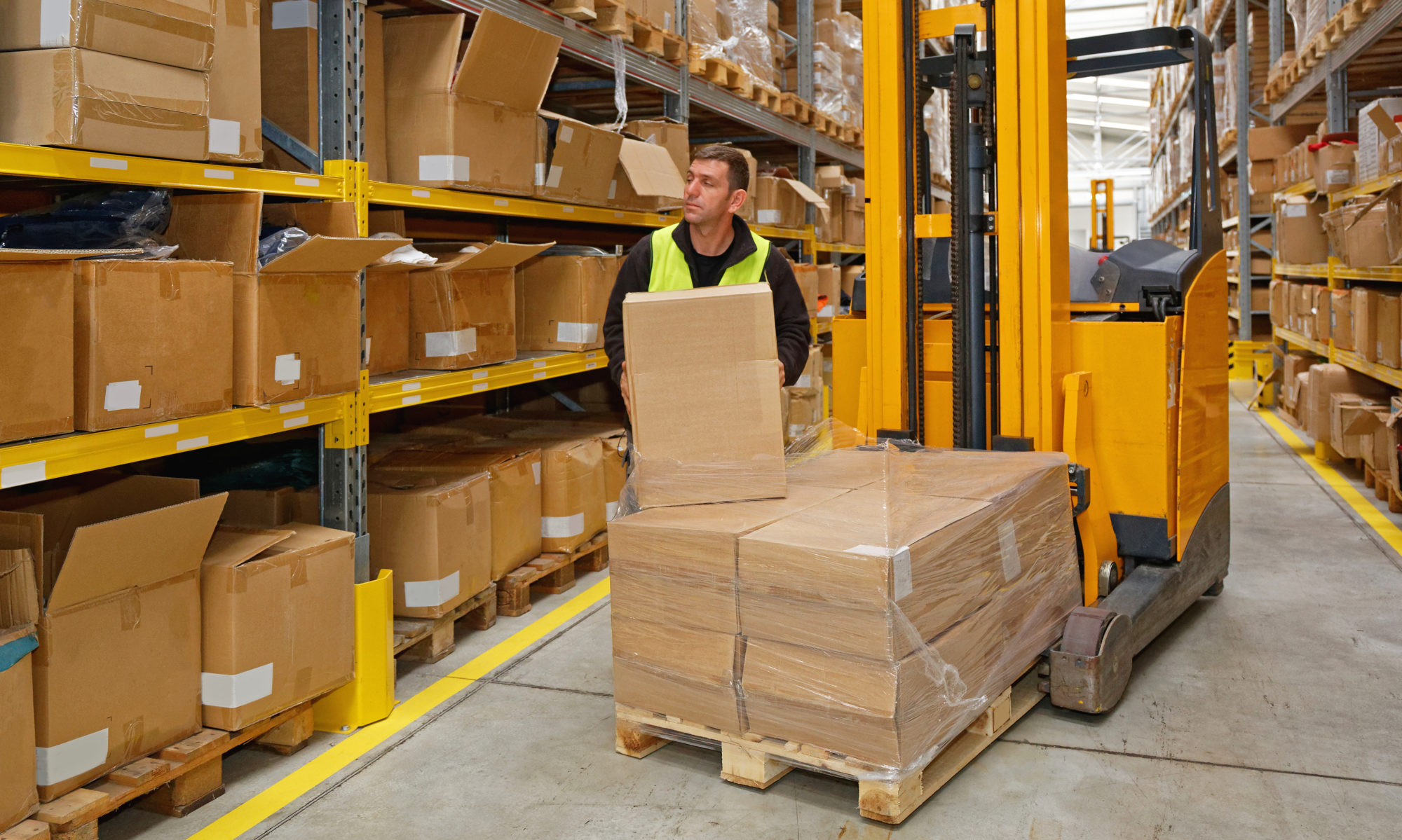
Fulfillment Warehouse

In 1979, Michael Aldrich invented online shopping that continued to gain widespread popularity and made shopping a lot easier. It is now known as ecommerce. Over time, it has become the most preferred method of shopping and has provided significant opportunities for businesses around the world. According to a study, North America alone had around 223 million online shoppers in 2017, and world retail ecommerce sales reached $2.3 trillion. It is estimated that retail ecommerce sales will reach $4.9 trillion by 2021.

Early Years of Ecommerce

Michael Aldrich found a way to connect domestic television and a multi-user transaction processing computer via telephone lines. His invention was called the teleputer, and it allowed users to buy various items without leaving their homes. Aldrich’s invention enabled people to carry out transactions anytime and anywhere.

In 1991, when the World Wide Web became widely available, ecommerce experienced massive growth. One of the very first successful ecommerce platforms was eBay. In 1995, eBay launched an online auction website where people bought and sold used items from one another. By 1996, eBay sold well over $7.2 million worth of goods and had only two full-time employees.

Another company that saw its stock rise with the emergence of the World Wide Web was Amazon. Founded in 1994 by Jeff Bezos, Amazon was created with the intention to sell books. In the first month, it started selling books across the US and other 45 countries. Today, Amazon offers a wide range of products.

The Growth of Ecommerce

Ecommerce is continuously evolving since it has to keep up with the competitive online market and the rate of development. With the emergence of newer technologies, online retailers have to utilize new and effective ways to generate leads and make more sales. Some of the inventions that have drastically impacted ecommerce are digital marketing and mcommerce. The infographic below will further provide you with more facts about ecommerce.

Tips for Turning Instagram into a Sales Generating Machine for your Store

Medallion Fulfillment - a Fulfillment Company

So you’ve optimized your website content and you regularly engage with followers on Facebook and Twitter. If that’s the extent of your social media campaign, you’re ignoring a dynamic platform that can be a valuable tool in your online arsenal.

Instagram is more than just a place to post pictures of artfully arranged food. With approximately 800 million active monthly users, Instagram provides a great platform for you to connect with prospective customers.

Among the top 100 brands worldwide, 90 percent have an Instagram account, yet the business world has barely scratched the surface of the platform’s potential. Follow these tips from Instagram marketing experts to get orders flowing through your fulfillment warehouse.

Follow the Leader

Why spend time trying to reinvent the wheel? Large companies such as eBay and Amazon have the time and resources to research the impact of hashtags, relationship between text and image and other elements that make up effective Instagram posts. Study their accounts carefully and apply their methods.

Tell an Intriguing “Story”

Instagram Stories is a feature that lets you post a set of videos and still images in a slideshow format. Each Story stays online for a period of 24 hours, making it a perfect vehicle to tease promotions, new items and any other information you want to highlight.

Team Up with Influencers

Influence is a valuable commodity in marketing, and Instagram Influencers can help you exponentially expand your reach. Influencers are Instagram users who have established a reputation of expertise and trustworthiness in a particular area or niche.

Not sure where to start? Tomoson is a digital marketing platform with a searchable database of more than 50,000 Influencers that can be filtered by demographics, total reach and other criteria.

Walk in Your Customers’ Shoes

As with any social media marketing, an Instagram campaign requires careful planning and curation to achieve the desired results. When posting content to your Instagram feed, take a step back and view it as a customer would. Are the images and text projecting the image you want to cultivate?

Think Quality, not Quantity

Instagram marketing isn’t just a numbers game. You want to develop a base of followers who are truly interested in your brand and what you have to say. Instead of putting your Instagram feed on autopilot; focus on ways to connect with quality followers:

• Look for users via hashtags that correlate with your business and follow them first.

• Downplay blatant self-promotion in favor of engagement-based content, such as asking users to share photos based on a certain theme and marked with a hashtag.

• Create an emotional connection through posts about volunteer work or other personal passions.

Fulfillment Warehouse Services for Your Unique Success “Story”

Follow through on your Instagram campaign with impeccable customer service. Let our scalable fulfillment warehouse services provide a seamless customer experience, from ordering through delivery.

Contact us today and learn how Medallion Fulfillment & Logistics can handle your fulfillment warehouse needs, leaving you free for the important business of growing your sales.

Online Selling Tips for Promoting Your Products on Google Shopping

Learn About the Amazon Effect

With platforms dedicated to product feed and promotions, Google Shopping aims to simplify business for online merchants. The program is also tightly integrated with Shopify, a hugely popular e-commerce platform.

But don’t expect to set up Google Shopping and sit back while orders flow into your fulfillment warehouse. You’re at the mercy of Google Shopping’s control unless you take some proactive steps to optimize results.

Here are six expert tips for ways to get the most bang out of your Google Shopping buck and truly keep your fulfillment warehouse busy filling orders.

Optimize Your Website

• Are your product titles consistent with manufacturer listings?

• Does your own brand use titles with high search volume keywords?

• Is your page content unique, or do you simply copy-and-paste from other websites?

Add Negative Keywords

The word “negative” automatically sounds counterproductive, but this is an essential factor in your promotional strategy. When you enter negative keywords into Google Ads Shopping Campaigns, they keep your ad from showing for untargeted traffic you do not want.

Clicks without conversions do nothing but cost you money. Proper use of negative keywords helps assure that your ads will get in front of people who have a genuine interest in your product or service.

Segment Your Google Shopping Campaigns

Your products don’t all sell at the same rate, so why should they all get equal amounts of your promotional budget? If everything goes in the same bucket, it’s difficult to tell which items are the most profitable.

When you segment campaigns, you get more specific data that lets you compare the individual performance of different items. Suggested categories include:

• Price

• Brand

• Best sellers

• Seasonality

Bid Strategically for Activity

Cost per click, or CPC, is another factor that should not be cookie-cutter. A good rule of thumb is to divide the price of a product by its profit margin, then multiply that number by the standard conversion rate. (According to SmartInsights, average conversion rates are 3.73 percent for traditional devices and 1.14 percent for mobile devices.)

Make Sure to Adjust Bids for Mobile Devices

As noted in the previous tip, there’s a significant spread between conversion rates for desktop and mobile. Google Shopping does allow you to set separate bids for mobile so that your budget is concentrated in the area that’s most productive.

Understand as you set your bid, that sometimes the first clicks you get during a path to a sale may be on a mobile device and the conversion may be on a desktop. Bid down mobile too far and you may cut your conversion activity.

Set Up Remarketing Campaigns

Based on the average conversion rate, it’s clear that even the best campaigns capture only a minority of shoppers. What’s more, only two percent of those conversions are captured on the first visit! When visitors drop off, re targeting these visitors with a remarketing campaign keeps your message in front of those prospects for up to 30 days.

Medallion: Your Full-Service Fulfillment Warehouse

Just as online marketing campaigns are not one-size-fits-all, a great fulfillment warehouse should be able to accommodate your individual specifications.

At Medallion Fulfillment & Logistics, we consider ourselves a partner in your success. Our services are flexible enough to scale up or down to fit your requirements.

Contact us today to learn why Medallion Fulfillment & Logistics is the right solution for your fulfillment warehouse needs.

Machine Learning – What You Need to Know and Leverage for Your E-commerce Store

Machine Learning – What You Need to Know and Leverage for Your E-commerce Store

Your e-commerce store has access to more data than retail businesses have had at any time in the past. But the truth is that the most detailed set of data means nothing on its own. It’s the interpretation and use of that data that makes the difference.

Although machine learning is an emerging technology, many providers are already starting to prepare service offerings to allow you to use machine learning to your benefit. Google AdWords is leading the way with Smart Bidding and enhanced bidding algorithms to boost conversions. Expect to see more providers embrace machine learning to help you manage your business more effectively this year.

Machine learning is a powerful tool that processes data far more efficiently than you or your employees could on your own, but you need to prioritize applications for maximum effectiveness.

Which of these technologies would have the greatest impact on your e-commerce store and fulfillment warehouse?

Personalizing the Customer Experience

oday’s technology is amazing, but it hasn’t reached the point of allowing you to provide virtual 3D salespeople for your customers. Without that personal contact, you lose valuable input from body language and other visual cues.

Machine learning can help you recapture that advantage by using data to create customer segments. This lets you target your approach based on specific factors that drive the buying decision for each segment.

Search Engine Ranking

It’s a basic concept: before your prospects can buy from you, they have to find you. How do you get your name out in front of customers before those of your competitors? Machine learning drills down beyond keywords into the nuts and bolts of searches that end with purchases. Google AdWords clients can use Google’s machine learning to provide ad exposure based on demographics and potential actions to improve visits and conversions.

Pricing

The downside of e-commerce is that customers can comparison shop from the comfort of their own home. With machine learning, you can set pricing that’s sensitive to a number of vital factors including competitors’ prices, type of customer and even time of day. Check with your shopping cart software to see how they will be implementing machine learning to assist you in being price sensitive.

Fraud Detection and Prevention

E-commerce companies are more vulnerable to fraud than brick-and-mortar stores are, and the negative effects can remain long after the transactions. Manual safeguards are inadequate, but machine learning can rapidly “spot” potential problems.

Customer Support

How do you maintain effective customer support at scale? The answer lies in machine learning technology such as chatbots, which give your customers the freedom of self-service combined with a high level of support.

Accurate Supply and Demand Prediction

Supply and demand forecasting has long been a staple of retail operations, but machine learning can perform this process with a greater degree of precision thanks to its ability to make discoveries and connections that are beyond the scope of humans.

Product Recommendations

Product recommendations are the best way to generate add-on and repeat sales. But where employees are limited to their own knowledge, machine learning technology can infinitely process and cross-reference buying behavior to discover previously unseen trends.

Elite Fulfillment Warehouse Services for Your E-commerce Business

Medallion Fulfillment & Logistics provides scalable services that grow with your business over time. With advanced technology tools that interface with most major shopping carts, Medallion makes it easy to manage your store at scale.

Is your e-commerce company prepared to handle order-filling and logistics for your growing sales? Contact Medallion Fulfillment & Logistics to learn how our fulfillment warehouse services provide scalable services that accommodate the specific needs of your business.

Switch Fulfillment Houses Smoothly

How to Switch to Medallion Fulfillment Warehouse Smoothly

This article focuses on the issues and steps involved in moving your fulfillment operation. You may be starting from the point where you’ve outgrown your in-house capabilities or have chosen to move your operation from one fulfillment provider to another.

In either case, what’s at stake is the ability of your business to meet its delivery commitments to customers, and we don’t have to tell you what an interruption in service can mean to your company.

Unfortunately, transition planning isn’t a cookie cutter process. Each company has some unique requirements and special relationships with fulfillment providers and/or suppliers.

What follows are some points to consider before, during and after the transition.

Understanding the Logistics Profile

Both you and your new fulfillment company should have planning sessions so that your fulfillment company both understands your requirements and understands how to support those requirements through their operations processes.

Expect that your fulfillment company will have some different approaches in handling fulfillment than that which you are used to. Here are some points to discuss to help understand those differences:

  • Service levels required
  • Sources of inventory and replenishment lead times
  • Special product handling requirements
    • Environmental requirements
    • Fragile, liquid, hazmat
    • Weights and dimensions
    • Lot or serial number control
    • Subscription handling
  • Channel support
    • Eg. Selling on multiple channels – Amazon, Ebay etc.
    • Big box selling (EDI and routing guides)
    • Small box retail (invoicing and pre-stickering)
    • Controlling inventory availability across channels
  • The more obvious discussions
    • Order volumes, line item volumes
    • # of SKU’s and SKU churn
    • Who will handle customer service and returns
    • Packaging and assembly requirements
    • International shipping

Make sure that your requirements are understood and that you understand how your new fulfillment company will handle those requirements.

Systems Integration

Before transitioning any product into the new warehouse, you need to be certain that your systems and those of your fulfillment partner can communicate flawlessly. At the very least, you should be able to connect your ERP and/or shopping cart to your fulfillment provider’s system in order to be able to send orders and ASN’s.

You should also test the capability of sending acknowledgement information back into your operations – example; inventory status, tracking information and receipts. You should become familiar with your fulfillment company’s reporting capabilities and be certain that they meet your analytical requirements.

Your product database should be established on your fulfillment provider’s systems, and an audit conducted to make sure that the SKU’s are in sync and key product information has been passed. Having a methodology for adding and deleting SKU’s is also important.

Shipping strategy should also be discussed and incorporated into your fulfillment partner’s systems. The strategy should include what carriers will be used under what circumstances. What are the strategies for ground, 2-3 day, overnight and international shipments?

When you are very certain that your systems are properly integrated and your requirements understood it’s now time to start the transition.

Communication

At the risk of stating the obvious, it’s important to communicate the new warehouse location and cut over dates to your customers, carriers, vendors and suppliers.

Location Mapping

When practical, if the receiving warehouse can map the locations for incoming stock in advance, a good deal of time can be saved in the initial receiving and put-away process.

Moving Day

A helpful technique in moving product is to move half of the product to the new location while continuing to ship from the old location, once that process is complete, cut over to the new location for shipping and subsequently move the remaining stock.

This 2-stage movement of product will give you a level of insurance in case some key aspect of the transition has a glitch. Once shipping is successful in the new location, the remaining stock can be transitioned.

Date sensitive stock may present some complications depending on the speed at which the stock is moving and the lot size. If it can be done, we suggest using the same strategy of splitting stock by expiration date.

A good transition starts with first contact with Medallion Fulfillment & Logistics or with Sprocket Express. We work hard to make transitioning to our warehouses fast and easy. We look forward to help you experience an improvement in logistics and fulfillment warehouse performance.