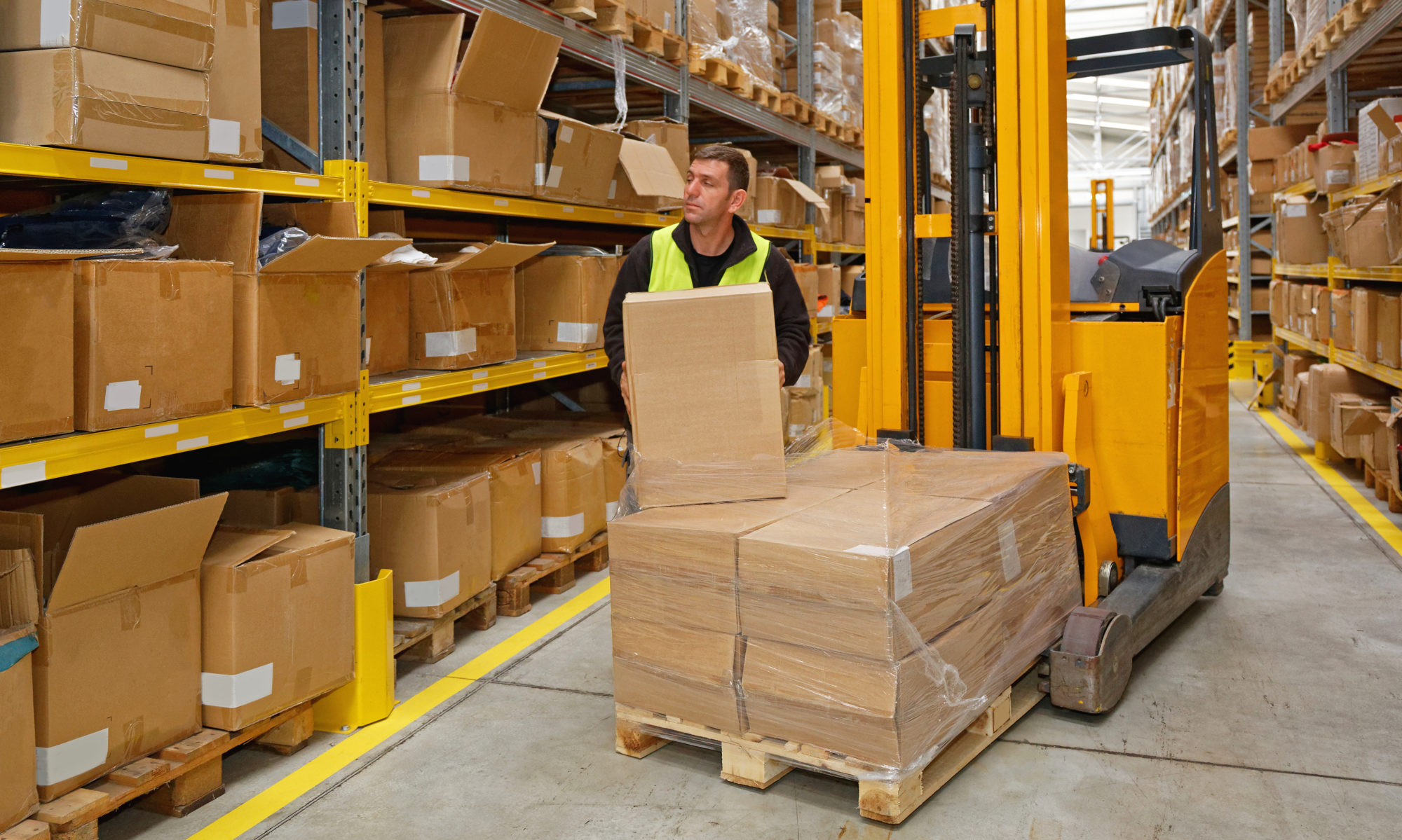
Highlights of Our Family Business Fulfillment Approach that Has Been the Key to Our Success

Cardboard box package with blur hand of Asian shopper woman picking product from shelf in warehouse. customer shopping lifestyle in department store or purchasing factory good concepts.

Medallion Fulfillment & Logistics is a family owned-and-operated business and we treat our clients as members of our family as well. Are you looking for a Long Beach fulfillment partner? Here are the qualities that set us above the rest.

1. State-of-the art technology

Fulfillment services include a number of moving parts that need to be coordinated to ensure that the whole process runs smoothly. We use a full range of top-of-the-line high-tech tools for a seamless experience from start to finish. This also affords us the ability to find creative solutions for any of your specific needs.

2. Elite customer service

Without customers, your business doesn’t exist, and neither does ours. Everyone in our Long Beach fulfillment company, from top to bottom, understands the importance of keeping customers happy. Every caller receives personal attention to ensure that their questions and problems are resolved to their satisfaction.

3. Flexible services

Your eCommerce business doesn’t stand still. It’s constantly growing and adapting to new challenges and opportunities. Medallion Fulfillment is with you every step of the way. Our services have the flexibility to scale along with your needs, whether it’s seasonal fluctuations or long-term operations.

4. Affordability

It’s always tempting for eCommerce entrepreneurs, especially with start-ups, to wear all the hats in order to preserve precious budget dollars. In reality, our fulfillment services are surprisingly cost-effective. You save on payroll and other expenses associated with order fulfillment, resulting in more money to spend on developing your business.

Partner with Our Long Beach Fulfillment Services

Don’t be fooled by the cookie-cutter, one-size-fits-all approach used by other fulfillment services. Every business is unique and we work with you to create a program that addresses your specific needs.

Contact us at Medallion Fulfillment & Logistics to take the next step in growing your eCommerce business.

Inbound Marketing Can Drive Traffic and Sales

Inbound Marketing and How it Can Grow Your Business with a Fulfillment Company.

Have you added inbound marketing to your eCommerce bag of tricks? Our fulfillment company experts explain why this relatively new concept should be an integral part of your business plan.

What Is Inbound Marketing?

  • Traditional outbound marketing tools such as TV and radio ads, cold calls, and direct mail use a scattershot approach in the hopes that their message will randomly land with motivated buyers.
  • On the other hand, inbound marketing utilizes Facebook, X, YouTube, and other digital platforms to distribute their message. This enables the use of search engine optimization (SEO) to target and pre-qualify shoppers and direct them to your site.

Crafting a Successful Marketing Plan

1. Create informative and compelling white papers, blogs, video clips, and other content to post on your website.

2. Strategically implement SEO to boost your rankings within the top search engines.

3. Distribute your content via Instagram, TikTok, LinkedIn, and other social media channels.

Benefits of Inbound Marketing

• With no charge to use many of the social media platforms, inbound marketing is extremely cost-effective. Results of a HubSpot survey indicate an average cost of $134 for an inbound lead versus $332 for an outbound lead.

• Outbound marketing uses an intrusive approach to “push” its message, which can often be counterproductive as consumers choose to ignore it. Inbound marketing targets interested buyers who are receptive to the message.

• Inbound marketing allows consumers themselves to control distribution of your message. When they share one of your posts or links, they implicitly add their stamp of approval, creating a level of trust.

More Than Just a Fulfillment Company

Getting your product from Point A to Point B isn’t all we do. We offer a number of value-added services, from advertising and media resources to website design and hosting. Contact us to learn more.

The Future of Ecommerce: Why Startups Should Partner with Third Party Logistics Providers

ecommerce startup fulfillment company

With Ecommerce startups, the automatic inclination is to keep costs down by doing everything in-house. In reality, your fledgling business can benefit from teaming up with experienced companies that provide crucial functions. Consider these valuable advantages that are gained by partnering with third party logistics providers.

1. Cost Savings

It may sound counterintuitive that hiring a 3PL can actually save money. But as with any good investment, the initial investment pays off over time.

  • Thanks to their volume of business, third party logistics providers have significant clout when it comes to negotiating prices with shippers.
  • Operating a warehouse, especially when you’re unsure about what you need, is an expensive proposition. A 3PL offers an economical alternative by charging you only for the space you use.

2. Inventory Management

You dream of a rapid increase in orders, but maintaining an efficient inventory flow can be a real nightmare. A first-rate 3PL incorporates barcodes, scanners, and other high-tech tools for accurate inventory tracking.

3. Customer Service

It takes only one unsatisfactory experience to lose a customer forever. The staff at a 3PL can reliably create a superior customer experience, from processing the order to handling returns.

4. Scalability

Avoid growing pains by partnering with a 3PL that can accommodate your needs, including seasonal fluctuations, as your business develops. You also gain more time to work on new products and improvements without impacting fulfillment of current orders.

5. Technology and Metrics

How do you know if you’re meeting your goals, or you need a course correction? 3PLs use sophisticated software that tracks advanced metrics, such as order revenues and sales by channel, in real time.

Your Success Is Our Success

At Medallion Fulfillment & Logistics, our number one goal is to help you succeed. Contact us to learn more.

How to Choose the Right Fulfillment Company for Your Ecommerce Startup in 2024

Fulfillment Company Team

With all the competing services available in the marketplace, how can you be sure you’re choosing the right fulfillment company to support your eCommerce startup? Use the features listed here to carefully evaluate the possible choices and determine how well they fit your particular needs.

1. Cost

Don’t just look at the number. Several factors go into the price tag for a fulfillment company’s services, so make sure you understand how they all fit.

  • Are storage fees calculated by pallet, bin, or shelf space?
  • Do you require customized packaging that will affect picking and packing fees?
  • Are their shipping rates competitive?

2. Scalability

A company may be sufficiently equipped to handle the needs of an eCommerce startup, but your goal is to grow and expand. Find out if the company in question has the resources to scale along with you.

3. Customer Service

Any company you choose will be acting as an extension of your business. If they’re unresponsive to the needs of your customers, that will strike a serious blow to your reputation right off the bat.

  • Take a good look at the company’s support channels and their procedures for responding to customers’ problems and questions.
  • Return and exchange policies should be straightforward and readily available. A top-notch fulfillment service will also provide return management solutions.
  • Does the company take a proactive approach to identifying and addressing recurring issues?

4. Track Record

As a startup, you’ll benefit from the knowledge and guidance of a company that has experience in the eCommerce field. Check out testimonials, reviews, and any other feedback from actual clients.

A Fulfillment Company That Checks All the Boxes

Decades of success place Medallion Fulfillment & Logistics head and shoulders above the competition. Contact us to learn more about what we have to offer your eCommerce startup.

The Technology Behind Successful Ecommerce Fulfillment

Distribution center concept and international communication network. globalized business, transportation and professional connections.

Online sales in the United States have more than surpassed expectations. In 2012, online sales hit a record $226 billion, and accounted for 7% of all total retail sales. Experts projected $327 billion by 2016, but they were wrong… Total online sales in 2016 were $394 billion! If your fulfillment company isn’t participating in the ecommerce segment, no doubt you know that you’re missing out on an exceptional opportunity!

In this article, I’ll focus on the technological capabilities a warehouse needs in order to implement an ecommerce fulfillment service. The article isn’t going to be about listing the pros and cons of the Top 10 software programs on the market, because I don’t know your current capabilities or strategic goals. Instead, I believe that the most productive approach is to breakdown the process to help you identify where you can improve your systems.

Let’s talk about process integration. Ecommerce clients will typically approach a fulfillment company with an established business infrastructure. Integration means adapting your systems to plug into those of your customer. The processes that are frequently affected are:

• Order Capture & Management

• Picking/Packing & Shipping

• Synchronizing Order and Inventory Status

• Visibility

• Client & Customer Service

Order Capture & Management

There are more than 300 ecommerce shopping cart companies on the market. Your company needs to be technically capable of adapting to the wide variety of methodologies for communicating with those carts. Orders from carts need to be harvested on a regular basis, controlled to insure none are dropped or duplicated, and converted into a form that is compatible with your system.

I believe this area represents the greatest technical challenge for fulfillment companies in the ecommerce space. Your tool bag for interfacing with a client’s systems must include a wide array of technologies, including the ability to interact with flat files, Application Program Interfaces, Web Services, File Transfer Protocol, call center systems, and the occasional manual-order entry. IT resources to plan the implementation and support this process need to be broadly skilled and creative. Administrative resources that perform the daily-order harvesting routines need to be highly attentive to detail.

Picking/Packing & Shipping

This process is probably the most straightforward. Picking slips are generated, product is picked and boxed, and shipping labels are applied using traditional fulfillment methods. Although there may be special requirements for packing slip and box branding, those requirements don’t vary much from conventional fulfillment. It is essential to operate at a very fast past as ecommerce performance is measured in hours and the volume of orders is measured in thousands per day.

Synchronizing Order and Inventory Status

Ecommerce fulfillment requires that the client’s shopping cart has the most recent inventory and order status information. Your systems need to regularly communicate inventory availability to the cart to ensure that a client’s customer is made aware of out-of-stock situations before placing an order. Customers also need to be able to reference the shopping cart to find the status of their order. Process synchronization between your operation and that of your client is an absolute necessity.

Visibility

Ecommerce fulfillment is very fast moving! We used to joke that customers would press the “buy” button and run to the front door looking for the UPS truck! With Amazon’s latest experiments in same-day delivery, this joke is almost a reality. Given the speed of ecommerce, it’s important for your clients to be able to have a real-time window into your process and inventory. At a minimum, clients should be able to see orders and inventory in near real time. The leading-edge, ecommerce fulfillment companies have taken a more pro-active stance by publishing “alerts” when important events are happening in the fulfillment process. Alert examples might include: Product X is running low on inventory; a new shipment of stock has arrived; or a customer has returned an order.

Client & Customer Service

The fulfillment process is heavily impacted by fast-paced marketing and promotional decisions. Ecommerce client support typically requires a designated coordinator to represent the client’s requirements to the fulfillment organization and to coordinate program changes. The volume and minutiae of detail often warrant the implementation of “issue logging” and “project workflow” processes within the organization. Given the pace of the business, these processes are best automated.

Some clients, particularly the Entrepreneur and Offshore segments, may ask the fulfillment organization to manage customer support. This might involve call-center work, authorizing returns, handling the occasional complaint, and so on. These client groups often have too small a volume to outsource their work to large call center. Having an arsenal of exceptional customer-support tools, therefore, positions you to capitalize on a good revenue opportunity.

In summary, successful ecommerce fulfillment relies on solid technical foundations. Warehouses and 3PLs must understand that ecommerce clients have very different needs (and expectations) for the technical aptitude, agility and pace of their fulfillment partners. To fully capitalize on the ecommerce segment, your fulfillment service must meet–and exceed–these requirements.