
The Lizard That Ate My Living Room: A Case Study in Accidental Success

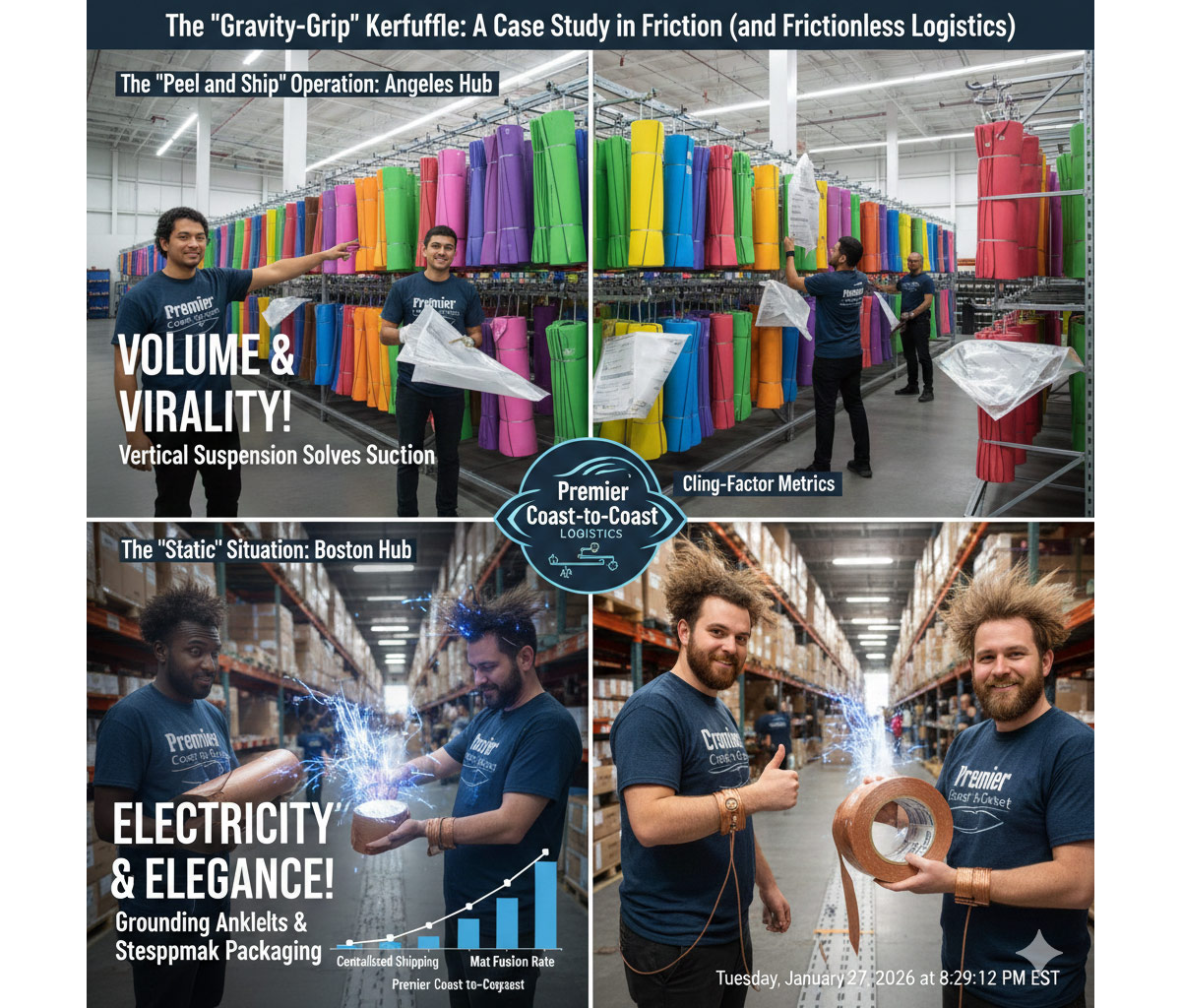
Image created in Gemini to match the theme of this blog post and fictional case study.

How one viral startup went from cardboard chaos to global shipping— without losing its mind. A fictional case study, but you may see yourself in this article.

Sarah Evans was a Junior Art Director who spent her days making logos for gluten-free dog treats and her nights staring at the ceiling, wondering if she was actually good at anything. She channeled this existential dread into a sewing project.

One rainy Sunday, Sarah created “Gary.”

Gary was the Imposter Syndrome Iguana. He was a four-foot-long, ten-pound weighted plush reptile. He had massive, anxious eyes that seemed to look in two different directions, and he wore a tiny, removable polyester necktie.

He was ridiculous. He was lumpy. And his tag read: “I have no idea what I’m doing, and neither do you. Let’s cuddle.”

Sarah put Gary on her Shopify store, “The Anxious Zoo,” mostly as a joke to show her mom she was “diversifying her portfolio.” She posted a 12-second video on TikTok of Gary sitting at a laptop, looking overwhelmed by an Excel spreadsheet, with the caption: “Me pretending to understand the meeting.”

Then, she went to bed.

The Monday Morning Doom-Scroll

When Sarah woke up, her phone was vibrating so hard it had walked itself off the nightstand.

The video had 6.5 million views.

The comments were a wall of desperation:

  • “I NEED GARY.”
  • “Is he available in corporate grey?”
  • “I have never felt so seen by a reptile.”
  • “Take my money. TAKE IT.”

Sarah opened her Shopify app. She usually saw zero to three orders a month. Today, the number didn’t look real.

3,200 Orders.

Sarah did the math. She had fabric for four lizards. She had one sewing machine. And she lived in a 700-square-foot walk-up apartment in the city.

“Oh no,” Sarah whispered.

The Descent into Cardboard Madness

The next four weeks were a blur of caffeine, polyester stuffing, and regret.

Sarah pre-sold the inventory, ordered a shipping container of fabric, and hired her three roommates to help stuff lizards in the living room. But manufacturing was the easy part. The real nightmare was the fulfillment.

Have you ever tried to pack a four-foot-long weighted iguana into a box? It is not graceful. It requires wrestling. It requires bending a stuffed animal into a yoga pose while taping a box shut with your teeth.

Sarah’s apartment ceased to be a home. It became a warehouse. The sofa was gone, buried under a mountain of size #4 boxes. The shower was used to store rolls of bubble wrap. The kitchen island was the “labeling station,” which meant every meal Sarah ate tasted faintly of adhesive.

The romance of being a “Small Business CEO” died quickly.

Sarah wasn’t designing anymore. She wasn’t marketing. She was a professional box-taper. She was spending six hours a day printing labels, three hours dealing with jammed printers, and four hours driving her Honda Civic back and forth to the Post Office.

The Post Office employees hated her. When Sarah walked in with her Ikea bags full of lumpy packages, the line went silent. The clerk, a woman named Barbara, would sigh the sigh of a thousand weary souls.

The Cracks Begin to Show

By Week Six, the adrenaline was gone. In its place was pure burnout.

Mistakes were happening. In her sleep-deprived haze, Sarah accidentally swapped labels.

  • A customer in Seattle who ordered a “Gary” received a bag of stuffing and a pair of scissors Sarah had lost.
  • A customer in London emailed to say their package had been stuck in “Customs Purgatory” for three weeks because Sarah filled out the commercial invoice wrong.

The emails piled up.

  • “Where is my lizard?”
  • “My tracking number doesn’t work.”
  • “I ordered this for a mental health break and now I am more stressed.”

Sarah was making more money than she had ever made in her life, but she was miserable. She was drowning in her own success. She realized she had become the very thing Gary represented: a fraud. She wasn’t a business owner; she was a hoarder with a shipping account.

She sat on the floor, surrounded by 400 unfulfilled orders, and cried into Gary’s weighted stomach.

“I need help,” she told the plush toy. Gary stared back, eyes wide and anxious.

The Search for Sanity

Sarah opened her laptop. She typed: “Fulfillment companies that won’t laugh at my lizard.”

She was terrified of Third-Party Logistics (3PL). She assumed they were only for the big guys—the Nikes and Amazons of the world. She assumed they would require a minimum of 50,000 units, or that they would charge her hidden fees for “irregularly shaped reptiles.”

She called three big firms. Two didn’t answer. One told her she was “too small of a fish” (ironic, given the reptile theme).

Then, she found Medallion Fulfillment & Logistics.

She dialed the number, expecting a robot. Instead, she got a human.

Medallion Fulfillment, how can we help you grow?

“Hi,” Sarah croaked. “I have a weird situation. I have… thousands of weighted iguanas. And I can’t see my floor anymore.”

The voice on the other end didn’t laugh. They didn’t ask if she was crazy. They asked about her SKU count. They asked about her average order volume. They asked about her integration needs.

“We can handle Gary,” the rep said confidently. “We handle weird. Weird is our specialty. Let’s get you integrated.”

The Rescue Mission

The onboarding wasn’t the scary corporate interrogation Sarah expected. It was a partnership.

Medallion hooked directly into her Shopify store. They set up the parameters. They explained how they would receive the bulk inventory directly from her manufacturer (so the fabric never had to touch her apartment again).

Three days later, a truck arrived at Sarah’s building.

It was the most beautiful sight she had ever seen. Professional movers loaded the pallets of Garys. They cleared the hallway. They liberated the shower from the bubble wrap.

As the truck drove away, taking the logistics nightmare to Medallion’s secure warehouse, Sarah stood on the sidewalk. She took a deep breath. The air didn’t smell like cardboard dust. It smelled like freedom.

The New Normal

The real magic happened the following Tuesday.

Another influencer, a famous tech CEO, tweeted a picture of Gary the Iguana sitting in a boardroom chair.

“New hire is killing it,” the tweet read.

Orders spiked. 5,000 units in four hours.

In the old days, this would have triggered a panic attack. Sarah would have been hyperventilating.

Instead, Sarah sat at a coffee shop, drinking a latte. She watched the orders ping on her phone.

  • Order #9042: Received.
  • Status: Picked. Packed. Shipped.

She refreshed the page. Medallion’s team was processing orders faster than she could print a single label. They were getting shipping rates Sarah couldn’t access as a solo shipper. They handled the international customs forms for the London orders.

When a customer in Miami wanted to return a Gary because “he looked too judgmental,” Medallion handled the return logistics. Sarah didn’t have to touch a single roll of tape.

The Lesson

Six months later, “The Anxious Zoo” has expanded. Sarah now sells “The Burnout Badger” and “The Micro-Manager Mantis.” She is scaling rapidly, selling internationally, and sleeping eight hours a night.

She is no longer a professional box-packer. She is a Creative Director and CEO.

The moral of the story? Viral success is the dream, but without the logistics to back it up, it’s a trap. You didn’t start your business to memorize shipping zones, fight with tape guns, or alienate your local post office workers. You started it to create, to sell, and to grow.

Don’t be like Sarah in Month One. Don’t let your success bury you in cardboard.

Whether you’re selling high-tech gadgets, organic supplements, or four-foot weighted lizards wearing ties, your job is the vision. Let the experts handle the heavy lifting.

Don’t let your logistics be an imposter.

Is your living room becoming a warehouse?

Medallion Fulfillment & Logistics isn’t just a shipping dock; we are your growth partner. From family-owned startups to viral sensations, we handle the picking, packing, and shipping so you can focus on the next big idea.

We offer:

  • Seamless Integration: We plug right into your e-commerce platform.
  • Scalability: Whether you ship 50 orders or 50,000, we have the space.
  • Human Support: Real people who understand your product (even if it’s a lizard).

Contact Medallion Fulfillment & Logistics Today Let us handle the boxes. You handle the business.

This is a fictional case study, but if you see yourself as a Sarah, Medallion Fulfillment & Logistics is here to help. We are a family operated business with a laser beam focus on helping your business grow.

My Search for a Fulfillment Center Was a Hot Mess. Here’s How I Found My People.

Cat in a cowboy hat in search of a fulfillment center

I remember the exact moment the magic died. My online store, “Cats in Hats” (don’t judge, it’s a lucrative niche), was finally taking off. Orders were pouring in. My apartment, however, had transformed from a cozy living space into a cardboard box labyrinth with a faint, persistent scent of packing tape and catnip. I tripped over a stack of mailers on my way to the coffee machine and realized this wasn’t sustainable. This was a fire hazard with a purring soundtrack.

The solution seemed simple: I needed a fulfillment center. A magical place where my adorable, hat-wearing cat merchandise would be stored, picked, packed, and shipped by organized professionals. I pictured a serene warehouse, possibly with angels singing softly as they placed tiny fedoras on plush felines. The reality of finding this place was, to put it mildly, a journey into the heart of corporate jargon and confusion.

My search began, as all modern quests do, with a frantic Google search. “What is a fulfillment center?” was followed by “3PL for small business” and eventually, “help my apartment is a box fort.” The results were overwhelming. Every website was a sea of acronyms: 3PL, WMS, EDI, FBA… I felt like I was trying to decipher secret government codes, not find someone to mail a cat wearing a sombrero.

The Rabbit Hole of Rate Cards and Robot Overlords

Each company I investigated seemed to fall into one of two categories. First, there were the mega-corporations. Their websites were sleek, filled with videos of intimidatingly efficient robots gliding through warehouses the size of small nations. Their “contact us” forms felt like applying for a top-secret security clearance. I imagined my small inventory of felt berets getting lost in a sea of protein powder and subscription boxes, a tiny fish in an ocean of commerce.

Their rate cards were even scarier. They talked about receiving fees, storage fees (calculated by cubic foot, as if I knew the volumetric dimensions of a fluffy cat), pick-and-pack fees (per-item or per-order?), and something called a “long-term storage penalty.” I started having nightmares about an unpaid invoice leading to my entire inventory being launched into the sun. I just wanted someone to put my stuff in a box and mail it, not solve a complex calculus problem to figure out my monthly bill.

Then there was the other end of the spectrum. The “we’re two guys in a garage” operations. While the personal touch was appealing, their websites looked like they were designed in 1998. The lack of clear information or professional processes gave me visions of my orders being packed by a guy named Chad between rounds of video games. I needed reliability, not just a friendly dude who might misplace a box of tiny propeller beanies.

I was stuck. One side felt too big, too impersonal, and too expensive. The other felt too small and too risky. Where was the Goldilocks of fulfillment? Where was the company that was just right?

What I Really Wanted Was a Fulfillment Partner, Not a Vendor

Through the haze of confusing quotes and soulless corporate websites, I started to realize what I was truly looking for. I wasn’t just outsourcing a task; I was looking for a fulfillment partner to help my business grow.

I needed a team that would actually answer the phone. I wanted to talk to a human being who knew my name and understood that a sudden rush on “Formal Friday” top hats for tabbies was a good thing, not a logistical nightmare. I wanted someone who would treat my products with the same care I did. After all, I’d spent countless hours sourcing those miniature cowboy hats. They deserved respect.

Most importantly, I wanted transparency. No hidden fees, no confusing upcharges. Just a clear, straightforward process from a company that felt like they were on my side. I was starting to believe such a place was a myth, a legend whispered among burned-out Etsy sellers.

Finding the Medallion Family

Just as I was about to give up and accept my fate as the queen of a cardboard kingdom, I stumbled upon a company called Medallion Fulfillment & Logistics. The name sounded solid, dependable. But what really caught my eye was the phrase “family-owned and operated Fulfillment Center.”

Intrigued, I clicked. There were no videos of scary robots. Instead, I found information about a company that had been doing this for years. They talked about partnership, about treating their clients’ businesses as their own. It sounded… nice. It sounded human.

I learned they had two strategic Fulfillment Center locations, one in Los Angeles and another in Boston. This was a game-changer. I could split my inventory and reach my customers on both coasts faster and cheaper. My West Coast cat lovers could get their hats in record time, and so could my East Coast feline fashionistas. It was the reach of a big company with the feel of a local business.

Taking a deep breath, I filled out their contact form, half-expecting another automated email or a week of silence. To my surprise, a real person—a friendly, knowledgeable person—called me back that same day. They didn’t laugh at my “Cats in Hats” business model. In fact, they asked smart questions about my products, my order volume, and my goals. They explained their pricing in simple terms, walking me through every line item until I actually understood it.

There was no jargon, no pressure. It felt less like a sales call and more like a conversation with a wise, experienced friend who just happened to be an expert in logistics. They understood the anxieties of a small business owner because they were a family of business owners themselves.

I knew I had found my people.

Today, my apartment is an apartment again. My cats (the real ones) have room to roam without navigating a box maze. And my business? It’s thriving. My inventory is safe and sound in Medallion’s warehouses in Los Angeles and Boston, and my orders go out on time, every time. When I have a question, I know exactly who to call.

The search for a fulfillment center can feel like a lonely, confusing ordeal. But finding the right one, a team that genuinely cares about your success, makes all the difference. For me, that team was Medallion. They didn’t just give me warehouse space; they gave me peace of mind and became a trusted part of my “Cats in Hats” family.

This humorous post about a fictitious scenario, provides a real-world view of the struggle finding the right Fulfillment Partner that many business owners face.

Visit the Medallion Fulfillment & Logistics website to meet “your people”, the friendly and knowledgeable team at Medallion Fulfillment today.

What Is a Fulfillment Service? A Guide for Growing Stores

Medallion Warehouse Station for packing and shipping products

Running an eCommerce store often feels like juggling flaming swords. You have to handle marketing, website maintenance, product development, and customer service. Then, just when you think you have a handle on things, an order comes in. That should be a moment of celebration. Instead, it triggers a panic about cardboard boxes, packing tape, and rushing to the post office before it closes.

If this scenario sounds familiar, you are likely handling fulfillment yourself. While self-fulfillment works for hobbyists, it quickly becomes a bottleneck for growing businesses. This is where a fulfillment service steps in.

This guide will break down exactly what a fulfillment service is, how the process works behind the scenes, and why partnering with one is often the turning point for successful online brands.

Defining the Fulfillment Service

At its simplest level, a fulfillment service is a third-party company that stores your products, packs your orders, and ships them to your customers on your behalf. In the logistics industry, this is often referred to as Third-Party Logistics, or 3PL.

Think of a fulfillment center as your business’s backend warehouse and shipping department combined. instead of your garage or a rented storage unit, your inventory lives in a professional facility designed specifically for efficiency. When a customer buys something from your website, the order data flows directly to this facility. A team of professionals then picks the item off the shelf, packs it securely, and hands it off to a shipping carrier like UPS, FedEx, or USPS.

You sell the product; they do the heavy lifting to get it to the customer’s doorstep.

How the Fulfillment Process Actually Works

The concept sounds simple, but the machinery behind it is quite sophisticated. To understand the value, it helps to see the lifecycle of an order through the eyes of a fulfillment provider like Medallion Fulfillment & Logistics.

1. Receiving and Inventory Storage

Before any orders can be shipped, your products must arrive at the fulfillment center. This stage is called “receiving.” You send your inventory—whether it’s a few pallets or several truckloads—to the fulfillment warehouse.

The receiving team checks the shipment to ensure everything arrived safely and matches the packing list. Once verified, your items are scanned into an inventory management system and placed in designated storage locations. This might be on pallet racks for large items or in bins for smaller goods. You can usually view these inventory levels in real-time through a digital dashboard, so you always know what is in stock without having to count it yourself.

2. Order Processing

This is where the magic happens. When a customer places an order on your Shopify, WooCommerce, or Amazon store, that information is automatically transmitted to the fulfillment center’s warehouse management system (WMS).

This integration is crucial. It means you don’t have to email spreadsheets or manually enter addresses. The system verifies the address, checks stock levels, and generates a “pick list” for the warehouse staff.

3. Picking and Packing

A warehouse associate receives the pick list and locates your items within the facility. Professional fulfillment centers use optimized routes to ensure pickers aren’t wasting time walking back and forth unnecessarily.

Once the items are picked, they move to a packing station. Here, experts choose the right size box or mailer to minimize waste and reduce shipping costs. They add necessary dunnage (bubble wrap, air pillows, or kraft paper) to protect the product. If you have custom packaging requirements—like branded tissue paper or marketing inserts—this is where they are added to create a memorable unboxing experience.

4. Shipping

The packed box is sealed, weighed, and labeled. Because fulfillment services ship thousands of packages a day, they negotiate bulk shipping rates with major carriers. These savings are often passed on to you, meaning it’s frequently cheaper for a 3PL to ship your package than for you to do it yourself.

Carriers pick up the shipments daily. Tracking numbers are automatically sent back to your online store, which then emails the customer to let them know their package is on the way.

5. Returns Management (Reverse Logistics)

eCommerce returns are inevitable. A good fulfillment service handles this headache for you. Customers ship items back to the warehouse, where the team inspects them for damage. If the item is in sellable condition, it goes back into inventory. If not, it is disposed of according to your rules.

Why eCommerce Owners Need a Fulfillment Partner

You might be thinking, “I can pack boxes myself. Why should I pay someone else to do it?” That is a valid question for a brand new store. However, as you scale, the opportunity cost of packing your own boxes becomes massive.

Reclaiming Your Time

Every hour you spend taping boxes is an hour you are not spending on growth. You cannot build a marketing strategy, design new products, or negotiate with suppliers if you are buried in packing peanuts. Outsourcing fulfillment buys back your most valuable asset: time. It allows you to focus on working on your business rather than in your business.

Lowering Shipping Costs and Transit Times

Customers today expect Amazon-level speed and free shipping. Competing with that as a small business is tough.

Fulfillment centers often have strategic locations that allow them to reach the majority of customers within 1-2 days. Furthermore, their negotiated carrier rates can significantly lower your shipping spend. A solo merchant paying retail rates at the post office is at a severe disadvantage compared to a merchant using a 3PL’s bulk discounts.

Scaling Without Growing Pains

What happens if your product goes viral on TikTok tomorrow? If you get 500 orders overnight, can you physically pack them all in your living room?

Handling a sudden spike in sales is the downfall of many small businesses. They get the orders but fail to deliver them on time, leading to bad reviews and chargebacks. A fulfillment service is built for scalability. They have the staff and infrastructure to handle spikes in volume seamlessly. Whether you sell 10 products a day or 10,000, the process remains the same for you.

Professional Inventory Management

Losing track of stock leads to two expensive problems: overselling (selling items you don’t have) and dead stock (ordering items you don’t need). Fulfillment services provide sophisticated technology that tracks every SKU. You get data-driven insights on which products are moving fast and which are gathering dust, helping you make smarter purchasing decisions.

When Is the Right Time to Outsource?

There is no single rule, but there are clear signs that it is time to make the switch.

If your house is overflowing with boxes, your family is tired of helping you pack orders on weekends, or you find yourself dreading the “cha-ching” notification of a new sale because it means more work, it is time to look for a partner.

Additionally, if you want to expand internationally or offer 2-day shipping to compete with big box stores, you likely need the infrastructure of a professional logistics provider.

The Medallion Fulfillment & Logistics Difference

Choosing a fulfillment partner is like choosing a business partner. You need reliability, transparency, and communication.

At Medallion Fulfillment & Logistics, we don’t just move boxes; we help move businesses forward. We understand that we are the last touchpoint between you and your customer. When a package arrives on time and perfectly packed, your customer credits you, not us—and that is exactly how it should be.

We offer flexible solutions tailored to your specific needs, whether you are a startup looking to stabilize your operations or an established brand seeking better rates and service. Our technology integrates seamlessly with your store, giving you total visibility without the manual labor.

Ready to Stop Packing and Start Growing?

Don’t let logistics limit your potential. If you are ready to streamline your shipping, reduce your overhead, and delight your customers with faster delivery, it is time to talk to Medallion Fulfillment & Logistics.

Contact us today for a free consultation and quote. Let us handle the logistics so you can get back to building your empire.

Warehousing or Fulfillment Service – Understanding Your Needs

Medallion Fulfillment for Third Party Fulfillment Needs.

As the operator of a virtual storefront, your eCommerce business needs storage for your products and a way to fulfill orders. Which will better satisfy your needs: a warehouse or a fulfillment company? Take a closer look at how each one works.

Difference Between Warehouse and Fulfillment Center

• Warehouses are widely used by both eCommerce shops and brick-and-mortar stores. These large facilities provide storage for a company’s inventory until it’s sold. Individual SKUs (stock keeping units) are kept on shelves or in storage bins and containers to facilitate order-picking.

• On the other hand, a fulfillment center is a more comprehensive operation. In addition to storing product, a fulfillment center generally handles the entire process, from inventory management to order filling and shipping. These centers are sometimes referred to as a third-party logistics provider, or 3PL.

Benefits of a Fulfillment Company

• In business, larger volume means better pricing. A fulfillment center manages a number of customers, allowing them to receive more advantageous pricing on supplies and transportation than you could ever obtain on your own.

• Are you finding it difficult to keep up with the ever-increasing number of orders? Is it taking too long for customers to receive their products? Fulfillment centers have streamlined processes that can be scaled to accommodate company growth.

• Order fulfillment involves many moving parts. Managing this side of your business on your own is cumbersome and time-consuming. When you partner with a fulfillment warehouse, it frees you up to spend your time and energy growing your business.

A Fulfillment Company Invested in Your Success

At Medallion Fulfillment & Logistics, your success means our success. We have a variety of services, including start-up and Amazon replenishment warehousing, that can be tailored to fit your individual needs. Contact us today for more information.

How Do I Know I Am Ready to Hire a Fulfillment Partner?

Young woman preparing boxes to ship

While you are getting your eCommerce business up and running, you are probably doing the bulk of the work yourself. Many online companies begin as cottage industries, operating out of a home or garage, such as Jeff Bezos famously did with Amazon.

Even if your eCommerce store does not reach Amazon’s sales levels, you are bound to reach a point where it is hard to keep up. How do you know when it is time to hire a fulfillment company? Ask yourself these questions to help guide your decision.

Are You Ready to Partner With a Fulfillment Company?

1. Are you running out of room?

As sales increase, you need more inventory to fill orders, along with more space to store that inventory. Unfortunately, science has yet to create a wall stretcher that will let you expand your current base of operations.

A fulfillment warehouse is designed to hold large quantities of product. As a plus, they have sophisticated inventory management software that provides efficient tracking and robust reporting.

2. Are you spending too much time running to UPS?

Whether you use USPS, UPS, or FedEx, you are bound to their policies and rates. Few things are more frustrating than scrambling to reach the post office just as they are locking the doors.

If you use a fulfillment service, you can say good-bye to that headache. Not only do they have daily pickups scheduled with all major carriers, but they can accommodate LTL (less than a truckload) shipments and you can benefit from their lower contracted rates. A fulfillment warehouse will also free you up from the task of following up on shipping problems.

3. Are you having a hard time finding labor?

We have all heard about the Great Resignation, with a significant number of people leaving the workforce due to a shift in priorities following the COVID shutdown. For this and other reasons, many employers are having difficulties finding and retaining qualified labor.

With a fulfillment company, you have the advantage of a full staff but pay based on your business alone. You no longer have the responsibility of recruiting, hiring, and managing employees, nor do you have to cover insurance and other labor-related expenses.

4. Can your infrastructure scale along with your business?

As your business grows, you will still find ebbs and flows along the way. The classic example is holiday sales, but there are many other situations that can cause fluctuations. For example, perhaps you sell scarves, bathing suits or other seasonal items.

A fulfillment company focuses on inventory management and order fulfillment. They are experts at these services, so they can navigate the process of scaling as needed to suit your business.

5. Are you expanding to other geographic areas?

Expanding your geographic reach is a natural progression. But with customers expecting two-day, next-day or even same-day delivery, it is crucial to have your product physically located nearby. If you are getting nervous at the thought of opening multiple facilities, a fulfillment warehouse can solve that problem.

6. Do you have time to run your business?

Increasing sales should be job #1. If fulfillment and logistics is taking time away from building your brand, coming up with new products and other sales-related projects, it’s time to take on a fulfillment partner.

Your #1 Choice for a Quality Fulfillment Company

At Medallion Fulfillment & Logistics, we truly consider ourselves a partner in your success. With more than 35 years of experience and facilities on both coasts, Medallion offers a full range of fulfillment services that are flexible enough to scale along with your business.

Contact us to learn more about our innovative Amazon replenishment warehousing service and other programs.