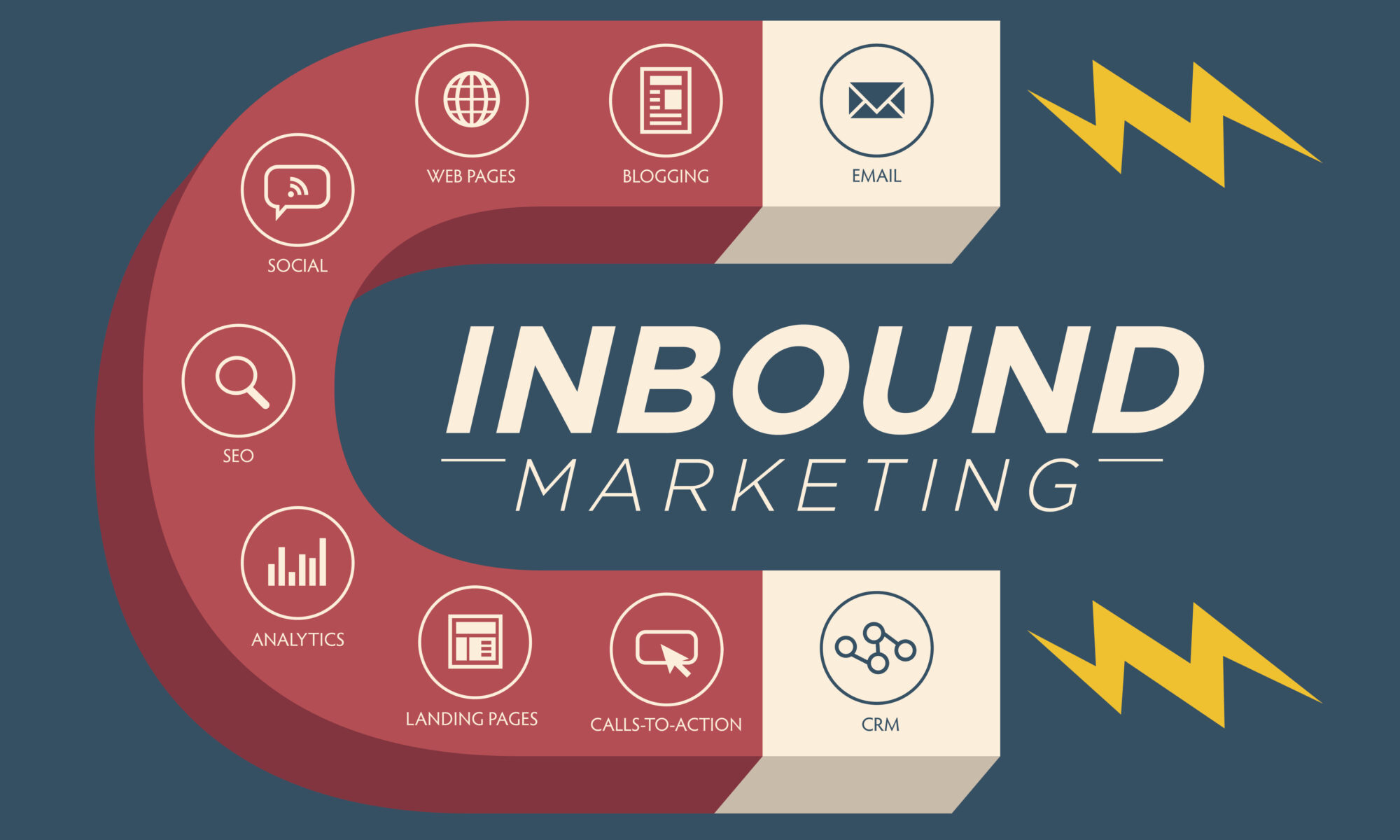
Inbound Marketing Can Drive Traffic and Sales

Inbound Marketing and How it Can Grow Your Business with a Fulfillment Company.

Have you added inbound marketing to your eCommerce bag of tricks? Our fulfillment company experts explain why this relatively new concept should be an integral part of your business plan.

What Is Inbound Marketing?

  • Traditional outbound marketing tools such as TV and radio ads, cold calls, and direct mail use a scattershot approach in the hopes that their message will randomly land with motivated buyers.
  • On the other hand, inbound marketing utilizes Facebook, X, YouTube, and other digital platforms to distribute their message. This enables the use of search engine optimization (SEO) to target and pre-qualify shoppers and direct them to your site.

Crafting a Successful Marketing Plan

1. Create informative and compelling white papers, blogs, video clips, and other content to post on your website.

2. Strategically implement SEO to boost your rankings within the top search engines.

3. Distribute your content via Instagram, TikTok, LinkedIn, and other social media channels.

Benefits of Inbound Marketing

• With no charge to use many of the social media platforms, inbound marketing is extremely cost-effective. Results of a HubSpot survey indicate an average cost of $134 for an inbound lead versus $332 for an outbound lead.

• Outbound marketing uses an intrusive approach to “push” its message, which can often be counterproductive as consumers choose to ignore it. Inbound marketing targets interested buyers who are receptive to the message.

• Inbound marketing allows consumers themselves to control distribution of your message. When they share one of your posts or links, they implicitly add their stamp of approval, creating a level of trust.

More Than Just a Fulfillment Company

Getting your product from Point A to Point B isn’t all we do. We offer a number of value-added services, from advertising and media resources to website design and hosting. Contact us to learn more.

The Technology Behind Successful Ecommerce Fulfillment

Distribution center concept and international communication network. globalized business, transportation and professional connections.

Online sales in the United States have more than surpassed expectations. In 2012, online sales hit a record $226 billion, and accounted for 7% of all total retail sales. Experts projected $327 billion by 2016, but they were wrong… Total online sales in 2016 were $394 billion! If your fulfillment company isn’t participating in the ecommerce segment, no doubt you know that you’re missing out on an exceptional opportunity!

In this article, I’ll focus on the technological capabilities a warehouse needs in order to implement an ecommerce fulfillment service. The article isn’t going to be about listing the pros and cons of the Top 10 software programs on the market, because I don’t know your current capabilities or strategic goals. Instead, I believe that the most productive approach is to breakdown the process to help you identify where you can improve your systems.

Let’s talk about process integration. Ecommerce clients will typically approach a fulfillment company with an established business infrastructure. Integration means adapting your systems to plug into those of your customer. The processes that are frequently affected are:

• Order Capture & Management

• Picking/Packing & Shipping

• Synchronizing Order and Inventory Status

• Visibility

• Client & Customer Service

Order Capture & Management

There are more than 300 ecommerce shopping cart companies on the market. Your company needs to be technically capable of adapting to the wide variety of methodologies for communicating with those carts. Orders from carts need to be harvested on a regular basis, controlled to insure none are dropped or duplicated, and converted into a form that is compatible with your system.

I believe this area represents the greatest technical challenge for fulfillment companies in the ecommerce space. Your tool bag for interfacing with a client’s systems must include a wide array of technologies, including the ability to interact with flat files, Application Program Interfaces, Web Services, File Transfer Protocol, call center systems, and the occasional manual-order entry. IT resources to plan the implementation and support this process need to be broadly skilled and creative. Administrative resources that perform the daily-order harvesting routines need to be highly attentive to detail.

Picking/Packing & Shipping

This process is probably the most straightforward. Picking slips are generated, product is picked and boxed, and shipping labels are applied using traditional fulfillment methods. Although there may be special requirements for packing slip and box branding, those requirements don’t vary much from conventional fulfillment. It is essential to operate at a very fast past as ecommerce performance is measured in hours and the volume of orders is measured in thousands per day.

Synchronizing Order and Inventory Status

Ecommerce fulfillment requires that the client’s shopping cart has the most recent inventory and order status information. Your systems need to regularly communicate inventory availability to the cart to ensure that a client’s customer is made aware of out-of-stock situations before placing an order. Customers also need to be able to reference the shopping cart to find the status of their order. Process synchronization between your operation and that of your client is an absolute necessity.

Visibility

Ecommerce fulfillment is very fast moving! We used to joke that customers would press the “buy” button and run to the front door looking for the UPS truck! With Amazon’s latest experiments in same-day delivery, this joke is almost a reality. Given the speed of ecommerce, it’s important for your clients to be able to have a real-time window into your process and inventory. At a minimum, clients should be able to see orders and inventory in near real time. The leading-edge, ecommerce fulfillment companies have taken a more pro-active stance by publishing “alerts” when important events are happening in the fulfillment process. Alert examples might include: Product X is running low on inventory; a new shipment of stock has arrived; or a customer has returned an order.

Client & Customer Service

The fulfillment process is heavily impacted by fast-paced marketing and promotional decisions. Ecommerce client support typically requires a designated coordinator to represent the client’s requirements to the fulfillment organization and to coordinate program changes. The volume and minutiae of detail often warrant the implementation of “issue logging” and “project workflow” processes within the organization. Given the pace of the business, these processes are best automated.

Some clients, particularly the Entrepreneur and Offshore segments, may ask the fulfillment organization to manage customer support. This might involve call-center work, authorizing returns, handling the occasional complaint, and so on. These client groups often have too small a volume to outsource their work to large call center. Having an arsenal of exceptional customer-support tools, therefore, positions you to capitalize on a good revenue opportunity.

In summary, successful ecommerce fulfillment relies on solid technical foundations. Warehouses and 3PLs must understand that ecommerce clients have very different needs (and expectations) for the technical aptitude, agility and pace of their fulfillment partners. To fully capitalize on the ecommerce segment, your fulfillment service must meet–and exceed–these requirements.

Startups and New Businesses Have Special Financial Needs, How to Plan for Success

Women, owner of small business packing product in boxes

For many new entrepreneurs, managing finances is one of the more intimidating aspects of a startup business. Ensuring that funding, expenses and other financial elements are controlled from the beginning prevents minor issues from snowballing into major problems.

The good news is that financial management is not as difficult as you might think. Our fulfillment warehouse has been part of several successful startups, so we’re offering these expert tips to get your fledgling business rolling with solid financial planning.

Manage Expenses

In the beginning, expenses can be a huge drain on cash flow during the time you need it the most. Fortunately, most costs can be reasonably estimated ahead of time. Create a year-long budget covering rent, wages, materials, taxes and other fixed expenses and focus on keeping them as low as possible.

Avoid Commingling Funds

As the owner, you may feel all funds are ultimately yours so the line between personal and business finances becomes blurred. When you keep both sides completely separate, it’s much easier to track business finances and prevent personal spending from draining the company account. You should also formally pay yourself a salary rather than simply dip into company funds.

Keep Detailed and Accurate Records

When it comes to judging your company’s performance, you can’t afford to rely on gut feelings or instinct. Make sure an experienced accountant, either in-house or outside, is keeping track of revenue and expenses. Review financial statements regularly and make adjustments based on a clear, overall picture.

Don’t Overdo It

You may feel compelled to take on as many roles as you can to save money, but that strategy can actually be counterproductive. Learning unfamiliar skills on the fly can end up costing more time and money than hiring an experienced person in the first place. Delegating work frees you up to focus on your passion and grow the business.

Learn to Negotiate

Don’t take vendor terms at face value. You’ll be surprised at how often suppliers are willing to make concessions to gain your business. Prepare a game plan ahead of time so you know what your goals are. Remember that it never hurts to ask!

Invest in Technology

Business technology has become so advanced and so widely integrated that your company will be at a serious disadvantage from day one without it. Any investment you make in technology will pay for itself in money and time savings.

Establish an Emergency Fund

Financial experts recommend that people maintain an emergency fund to cover unexpected expenses, and a company is no different. Put aside a percentage of income during peak times to help tide you through the slow periods.

Fulfillment Warehouse Services That Grow Along with You

Are you struggling with adjustments as your business expands? Our fulfillment warehouse services can be tailored to meet you specific needs today and scale to accommodate future requirements. Contact us at Medallion Fulfillment & Logistics to learn more about why we are the first choice for one-stop warehousing, inventory control and order processing services.

Why a Fulfillment Partner is Crucial to Retail Success in an Omnichannel World

Omnichannel Fulfillment Partner

From demands for fast shipping times to the ease of online shopping, finding ways to streamline these different processes is essential for retailers. Omnichannel fulfillment offers an effective approach. This involves integrating different processes to ensure prompt order processing, picking, packing, and shipping. Find out why a fulfillment partner is an important part of achieving success in today’s retail environment.

What Is Omnichannel Fulfillment?

Omnichannel fulfillment is taking the retail world by storm. This involves optimizing the fulfillment process through seamless integration. Rather than having inventory management, order processing, and other processes handled separately, omnichannel fulfillment combines them into one smooth system. This approach is considered a key part of ensuring success as a retailer as more consumers turn to online shopping and expect quick delivery windows.

How Can a Fulfillment Partner Help?

Working with a fulfillment partner can make it easier for your retail business to ensure that different processes are handled as efficiently as possible. Fulfillment warehouses can take care of multiple processes, such as processing orders, picking and packing merchandise, managing inventory, and shipping products to consumers. This approach takes all of these tasks off your hands, so you can focus on other parts of your retail business.

A fulfillment partner can also help your business offer more options as part of omnichannel fulfillment. Consumers expect to have options when purchasing products. Some prefer having items shipped to them, while others prefer curbside pickup. Fulfillment partners can ensure that your customers have different options to choose from, such as having items shipped from your store or purchasing products online and picking them up.

If you’re exploring fulfillment warehouse options, contact the experts at Medallion Fulfillment and Logistics. We can provide more information on our services to help your business make the most of omnichannel fulfillment.

Five Tips on How to Create Engaging Product Descriptions That Sell

Happy businessman working on his laptop at home. Handsome businessman reading an email on his laptop at home. Freelance entrepreneur typing on his laptop at home. Virtual remote worker at home

When you’re looking for ways to increase business, focusing on product descriptions can pay off. It’s not enough to simply list the product name and its features. These descriptions should entice customers to learn more about your products and make a purchase. Combining effective product descriptions with other business-boosting steps, such as partnering with a fulfillment warehouse for faster processing and shipping, can help your online store thrive.

Zoom in On Your Targeted Audience

General product descriptions might seem like a good way to reach a wider audience. However, these generic descriptions aren’t likely to appeal to many buyers overall. Focus on your target audience for each product description instead. Doing this gives you a much higher chance of appealing to prospective buyers.

Go Big on Benefits

Customers want to know why they should buy your products or how your products might help them. Rather than including a list of technical features, focus on the benefits your products provide. These benefits can persuade customers to find out more about your products and consider purchasing them.

Don’t Skimp on Details

Descriptions that use general phrases to describe products aren’t doing much to grab customers’ attention. Include specific details about your products to help customers learn more about them.

Share Glowing Reviews

Including reviews in your product descriptions can show other customers how popular your products are. Share images or quotes from reviews in your descriptions.

Format Product Descriptions with Care

Good product descriptions don’t just involve using the right words. The way these descriptions are formatted can also make them more or less effective. Create product descriptions that are easy to read. Use bullet points, white space, high-quality images, and larger font sizes.

Looking for the right fulfillment warehouse to partner with? Contact Medallion Fulfillment and Logistics for more information.

Your #1 Solution for Year-Round Warehouse Fulfillment Services

Your need for effective California fulfillment services doesn’t end when the sale is over. Medallion’s comprehensive programs are specifically designed to accommodate the ebbs and flows of your particular company.

Our robust Amazon replenishment warehousing services meet Amazon’s standards at a more cost-effective price. Contact us for more information.