Beyond Amazon, the Power of E-commerce Marketplace Diversification

It's time to consider diversification.

Plenty of businesses use Amazon as their primary online marketplace. But many observe the old adage and don’t put all of their eggs in one basket. Diversification is a successful e-commerce strategy that allows your business to reach more customers in more places.

Our clients use a variety of marketplaces to expand their businesses. These are some of our favorites. Medallion and Sprocket Express integrate with all of these markets quickly and efficiently so that you can ship all of your orders using one easy fulfillment interface.

eBay

This year marks eBay’s 25th anniversary as an online marketplace. It was one of the first and continues to function as a major selling platform. Although Amazon has risen to number one with roughly three times the annual gross merchandise volume (GMV), eBay is still the second leading marketplace in the U.S.

Similar to Amazon, an e-commerce eBay “shop” allows retailers a single branded storefront for all of their listings. Whether used in conjunction with a brand website or as the primary online presence, the eBay shop is a powerful selling tool.

Medallion and Sprocket are fluent in multiple e-commerce marketplaces and already integrates with eBay for a seamless experience, allowing multi-channel merchants to focus on their products and leave the marketplace protocols to us.

Walmart.com

Walmart is the third largest e-commerce marketplace in the United States and represents serious competition to Amazon. Approximately 95% of Americans have shopped at Walmart or Walmart.com in the past year, so this is a massive audience and it continues to grow.

It is easy to start selling on Walmart with these seven steps. Marketplace items appear in search results on Walmart.com alongside other items.

Shopify

Shopify is an e-commerce platform designed to allow clients to easily build a website with a shopping cart solution. As one of the most popular e-commerce cart packages, this software option is a powerful online selling tool.

For businesses that prefer to sell mainly on their own websites, Shopify is an ideal choice. You can also use the platform to build your own marketplace for your brand. Look for a fulfillment service like Medallion Fulfillment & Logistics and Sprocket Express, which is already integrated and ready to connect to your site in fifteen minutes.

Rakuten.com Shopping or Buy.com

Buy.com (recently renamed Rakuten.com Shopping) is one of the largest online retail marketplaces with over 20 million customers in the U.S. On this platform, e-commerce sellers can create their own fully branded “storefront” to maintain cohesive brand identity.

As an added bonus, Rakuten clients have access to an e-commerce consultant to advise sellers on ways to expand exposure and increase sales. Customers of the marketplace also earn cash back, which promotes loyalty to the platform and encourages repeat business.

Retail EDI

Companies that sell to wholesale customers to supply their retail stores often use Electronic Data Interchange (EDI) to transmit orders. This is the most efficient way to resupply because the system does all of the work behind the scenes and all the store has to do is enter the quantity of an item to trigger the order.

EDI is a powerful strategy for B2B sellers and can trim time and staff expenses, contributing to a healthier bottom-line and less error in the supply chain. Medallion and Sprocket Express are equipped with full EDI capabilities to allow our wholesale clients to focus on expanding their businesses without devoting valuable time to processing large orders.

East and West Coast Warehouses to Speed Delivery to Customers

Medallion and Sprocket Express are expressly designed to serve multichannel marketers and omnichannel sellers. With built-in integrations for numerous marketplaces, we are prepared to serve your business wherever and however you choose to sell.

We currently support multi-channel platforms for over 25% of our clients, so we can also coach on carrier selection, shipping method strategies and more, based on your unique business needs.

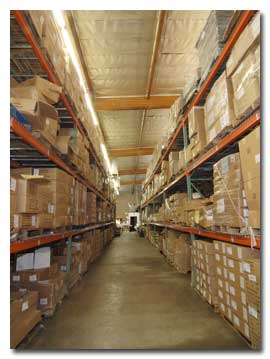
When you are ready to ramp up your business, Medallion with East and West Coast warehouse operations is ready to help you with shopping cart integrations that maximize your efficiency.

Be Careful How What You Say About Your Product Features and Benefits — Don’t Get Caught by the Feds

Don't Get Caught by the Feds

Several years ago, the Federal Trade Commission (FTC) revised its guides governing endorsements and testimonials for marketers. The timing of the revision is noteworthy — the previous guidelines dated back to 1980, before anyone heard of the Internet, much less Facebook. Your online marketing could have the best intentions, but any over-selling efforts could get flagged by the Feds.

Why the Update and Change by the FTC?

1) Not Everything Online is Yours to Use

Celebrity images or endorsements. Think a photo of Beyonce or Tim Tebow will grab attention and boost your brand image? Or perhaps you want to use a classic rock song as background for your YouTube video? You could be asking for a cease and desist letter at best, and a copyright infringement suit at worst. As for endorsements, it goes without saying that using someone’s image on your marketing implies endorsement that may not exist. If you do spring for a real endorsement, the FTC’s detailed guidelines cover honesty of opinion, reliability of the claim and disclosure of the celebrity being a paid spokesperson.

Social media misdeeds. For a glimpse of how social media has changed the face of marketing, you need only to see what the FTC is eyeing these days. According to Mashable, some questionable practices catching the agency’s eye include “flogging,” which consists of blogs that exist only to promote a product or service; and “astroturfing,” in which phony customers post misleading or biased reviews on sites like Yelp.

2) Claims Need Substantiation

Marketing claims. “Natura”… “organic”… “green.” Words like that may bring images of environmentally sound, sustainable and chemical-free products. But sprinkling in claims without substantiation can get you into trouble, as Neutrogena recently discovered. The cosmetics company was hit with a $1.8 million class action fine for describing some of its skin-care products as “natural” when they contained what the suit called “chemically derived, synthetic fragrances.”

As for “green” marketing claims, the FTC wants you to provide “competent and reliable evidence” of your claim, in the form of reliable scientific evidence, defined as tests, analyses, research, studies or other evidence when you claim your product is “green..”

Apples to OrangesGood, better and best. The subtle wording of parity claims constitutes an established form of marketing. Take Brand X’s claim that “no battery lasts longer.” Does that mean Brand X battery lasts longer than Brand Y? No; batteries are generally identical regardless of brand. As a parity claim, “no battery lasts longer” simply means that Brand Y (and every other brand) is likely to last the as long as Brand X — but not longer.

Parity claims abound in marketing: “No pain reliever works faster.” “Get the best chocolate taste.”  The FTC does not generally care about “best” parity claims. But superiority claims to be “better” than a competitor must be backed up with accurate and non-biased proof.

Some companies push the good/better/best envelope too far. When Ford once claimed its car was “700% quieter,” the FTC asked for a clarification. Ford had to admit that they meant the inside of the Ford was 700% quieter than the outside — not a highly compelling claim!

Carefully Craft Your Content

The vast majority of marketers are never cited by the authorities, so running a clean campaign is not so hard to accomplish. When you describe your features and benefits with care — giving an accurate description without over-selling or using unethical tactics — you’ll boost your company’s credibility while encouraging new business.

How to Reach Customers Now During the COVID-19 Crisis

How to Reach Out to Customers in the COVID-19 Crisis

With shut downs, shipping delays, and customers sitting at home, there’s never been a better time to keep you name in front of anxious buyers using an e-newsletter.

The COVID-19 epidemic is of unprecedented proportion. Many people have never experienced a work stoppage or for that matter a quarantine. While customers wait for orders that may be delayed due to shipping issues or supply chain problems, email is the best way to soothe worries and keep customers loyal to your business.

Here are some tips to take to heart with how to communicate with customers during these unusual times.

1. Be honest of what is going on with your business. If there are delays due to supply chain issues – share the challenges in a positive manner.

2. Accept and acknowledge the uncertainty of the situation. Be real, people truly want to connect with you during this crisis.

3. Express gratitude and appreciation for orders and for those that will wait to receive their goods due to unforeseen delays.

4. Keep a regular connection with your client-base. Specifically, contact during this uncertain period should be several times a week or once or twice a month.

If you need help setting up an e-newsletter we have expert providers that are ready to set up an account at iContact for you, load your list, and even customize our own mobile-friendly reusable HTML e-newsletter template. Just let us know and we will put you in contact with one of our experts or get you started fast.

For Medallion Fulfillment & Logistics clients, our provider has created a special mobile-friendly template for newsletters that can be updated with your logo and content. Ask us for more information about this concierge-level e-newsletter program including setup, implementation, content creation, and scheduling. Pricing is customized based on your need.

http://medallionenterprises.com/newsletters/medallion-sample-template.html

For do-it-yourselfers, an iContact account provides access to easy to use templates. You can enter in your own e-newsletter information and set up your own e-newsletter issues to send on your own schedule.

Our team or our experts can work with you directly to assist with your needs. Just give us a call and let us know that you would like to reach out to your clients by email – fast!

UPS Coronavirus Service information

COVID-19 and UPS Services

We have paraphrased and condensed the most recent communique we have received on UPS service during the coronavirus pandemic.

Customers are asking us a few key questions

• Can I count on UPS to deliver safely?

• How can UPS help my business?

• Is UPS supporting healthcare and pandemic response?

• Count on UPS to Keep Delivering – Get More Info Online.

UPS is Open for Business

UPS operations and The UPS Store® locations have been designated by the Governor’s offices in all 50 states as critical infrastructure, and we continue to pick up and deliver, even in restricted areas.

• No-touch No-sign Delivery: We’ve heard your concerns and changed how customers sign for packages to minimize contact.

• Delivering Safely

• UPS is taking measures to protect employees from exposure to coronavirus including enhanced cleaning and following WHO and CDC guidelines.

UPS is Ready to Help Your Business

• Talk to Us: Schedule a free 15-minute virtual consultation with our UPS small business team. Sign up for free on the UPS website.

• Take Control: View incoming and outgoing shipments at a glance, with UPS My Choice® for business.

• Stay Local: Pickup and drop off locations, including The UPS Store®, are still operating. The UPS Global Locator is being updated in real-time to reflect the nearest available active locations.

UPS is Helping the Healthcare Industry to Fight Coronavirus

• Drive-through Testing

• UPS is aiding the US government and healthcare customers in the battle against coronavirus. We’re mobilizing our air and ground networks to help.

• Humanitarian Relief

• We’ve provided $6 million in transportation, consulting, and cash to support coronavirus efforts.

Healthcare Customers

UPS provides extensive support to healthcare companies.

• Commercial labs

• Drive-through testing sites

• Pharmaceutical manufacturing & distribution

• Medical supply manufacturing & distribution

In Closing

From all of us at Medallion Fulfillment & Logistics and Sprocket Express, we say stay safe and know we are working hard to keep your business moving.

Google’s Going Local, Why Google Places Pages Are Now More Important than Ever for Organic Placement

Have you noticed the change in Google.com results? Have you seen all the red icons in front of listings whenever you do a Google search that contains a city location in the query? Are you noticing that your website’s organic (unpaid placement) seems to be pushed down below a myriad of local results? Welcome to the new world of Google’s localized results!

With Google pushing location specific listings pulled from their Google Places index, it’s getting harder for prospects to find your “real” website. Localization is the rage with search engines right now; even Bing and Yahoo have gotten into the act too. It is now more important than ever to use your local Places page as a doorway to bring visitors into your website. As Google is the big player in the world of search, we’ll focus on discussing Google Places accounts in this article, but be aware that Bing and Yahoo both have similar services.

If you have a business, you most likely already have a Google Places page even if you never created one. Google has planned ahead for you, and has created a page just for you, based on the information that it has found on the Web about your business. It’s your job to claim it, and then work the page over so it can be a selling tool to funnel customers and prospects into your “real” website.

How do you claim your listing?
First, visit this page: http://www.google.com/places/.  On the right you will see a section for business owners. Your listing is free, but you will need to set up or tie an existing Google account login to your new Google Places account. One word to the wise, if you are paying a third party to do set up for you, make sure that they tie the Google Places account to you and not to themselves. You want to retain ownership of your Google Places page as long as you have your business.

The sign up and set up interface is easy to use. You will enter in your physical address (no P.O. Boxes allowed), your phone number, email address, website URL, business description, and then select service or product categories. Don’t be afraid to choose custom categories that are short keywords of the services or products you provide. You can only set up a maximum of five categories.

Your Places page is not complete until you enter details about your business such as: operating hours, types of payment accepted, photos, YouTube.com videos, and finally the important “additional details”. Take time to add “additional details” that make sense. We recommend using keyword phrases for these “additional details”.  Keep in mind that what you enter here should be considered like a bulleted list, with a one to three word clarification in the second field to the right of the entered keyword. Focus on keywords that are indicative of what you sell and in a very short concise format.

Although you are done, your Places page will not go live until Google has verified that you are really located at the address your have listed in your Google Places account. Plan on two weeks for a postcard or plain envelop to come to you via regular mail at the listed location. This correspondence will contain a PIN. You must enter this PIN number in your Google Places account for your Places page to be put in the indexing queue. It may then take another one to four weeks for your listing to actually become live. Unfortunately setting up and verifying a Google Places page is not quick process but make sure to follow the instructions carefully. If someone has already claimed your physical location you will not be able to claim it as well. This is an important note to remember for office buildings and even businesses sharing physical spaces with the same street address. The location will be tied to a single Google Places account on a first come basis.

How to maintain top position with your Google Places listing?
As Google Places pages are so important now in the organic results, how can you improve placement and then retain it once you win it. We recommend that you do monthly updates of your photos and videos on your Google Places page. If you don’t have videos, now’s the time to start getting creative and make several short videos using your digital camera. Just load your video files to YouTube.com (tied to the same Google account that you used for your Google Places page). Insert the YouTube.com link to the video into your Google Places account in the video section. You can show up to five videos at a time. As for pictures we recommend sizing 20 or so into a square shape and then rotating ten different ones each month. Google seems to like and reward Places pages with better placement that are actively managed on a regular basis.

Google also seems to reward Google Places pages with better placement when the business offer coupons and has more review than their competitors. Not all markets seem to have a clear cut path to top placement, but we do know from research that in major markets reviews and coupons are just one of the keys for top placement of a Google Places page. Your geographic proximity to the person who has searched is still the top determining factor in which businesses are shown and then coupons and reviews will additionally rank the returned business listings.

Where do the reviews come from that appear on my Google Places page?
Google scans the Web and pulls reviews from all over and embeds them on your Google Places page. Users can also leave reviews directly by visiting your Places page if they are logged into their own Google account. Additionally, with the creation of Google Hotpot, a social business review tool, Google is actively seeking for others to rate your business with their own application.

Unfortunately, you have no control of the reviews that appear on your Places page. However, as the Places owner, if a poor review is posted, you can respond to the review, but there is no “remove this review” button. You can however flag the review for Google as inappropriate, but Google may leave the review at their option. If the review is pulled in from a site that is not a Google property, even if you flag it as inappropriate Google has stated that they will not block it from showing on your Places page.

Be careful if you are using a third party set up service that the creation of fictitious reviews is not part of your package. Your Places page could be dropped from the index through a violation of Google’s terms of service.

In conclusion, with the advent of search engine localization, claiming your Google Places page is a very important aspect of managing your online presence. With Google Places pages being ranked higher than websites for search queries that contain a location, you really must use this new tool to your advantage to funnel clients and prospects into your website.