
Boosting Your Business with Loyalty Programs and Incentives – 3 Considerations

As online shopping continues to make the consumer marketplace broader than ever, incentive-based programs remain an effective way to gain, nurture and retain customers. Not convinced? Consider these eye-opening statistics:

• According to a January 2016 report in Chief Marketer, the average North American shopper is a member of 13 loyalty and promotional programs.

• Jupiter Research has found that 80 percent of Internet users enter a sweepstakes at least once a year.

Planning Your Promotional and Loyalty Programs

Promotional programs should be planned carefully to get the most bang for your buck. Here are three factors that play a crucial role in the success of any rebates, contests or loyalty rewards.

1. Big Data
While the term may not sound particularly sophisticated, it gets right to the point: “Big Data” refers to the massive sets of information that can be captured and analyzed to uncover consumer habits, patterns and trends. The amounts of available data are increasing exponentially, so the key is getting your arms around it up-front to keep it organized and consolidated in a way that allows for thorough and accurate analysis to allow you to have actionable information for your promotion.

2. Social Media
Platforms such as Facebook and Twitter have become popular vehicles for promotions, and growing channels Instagram and Snapchat have quickly joined the party. It pays to partner up with a promotions expert who understands how to best leverage social media for easy participation and maximum returns.

3. Rise of the Millennials
Millennials are defined as young adults born between the years of 1980 and 2000. Members of this tech-savvy generation are more willing than their parents to allow access to personal data and web habits when the results, such as personally targeted offers, benefit them. Combine that with an expected spending power of $1.4 trillion by the year 2020, and it’s clear that millennials should be a big part of your promotional plan.

Medallion Fulfillment & Logistics: Your One-Stop Solution

For 2020 plan on focusing on growing sales and boosting your marketing efforts and let us handle the rest. We have more than 25 years of experience handling fulfillment services ranging from receiving and warehousing goods to credit card and rebate processing. Contact us today to learn more about how we can be a full-service solution for your fulfillment needs.

USPS Service Interruptions to Greece

Update on Mail Services to Greece

On November 6, 2020 the United States Postal Service received notice from Greece that effective November 7, 2020 a lockdown will be implemented throughout the country of Greece due to the COVID-19 pandemic.

There is a direct impact on collection and delivery of mail and packages sent through the Hellenic Post (ELTA).

This update impacts Priority Mail Express International, First-Class Mail International and First-Class Package Service, Priority Airmail. Surface Air Lift and M-Bag items.

For a full list of international service disruptions please visit https://about.usps.com/newsroom/service-alerts/international/welcome.htm

More Shopping Carts Now Interface Directly with Our System

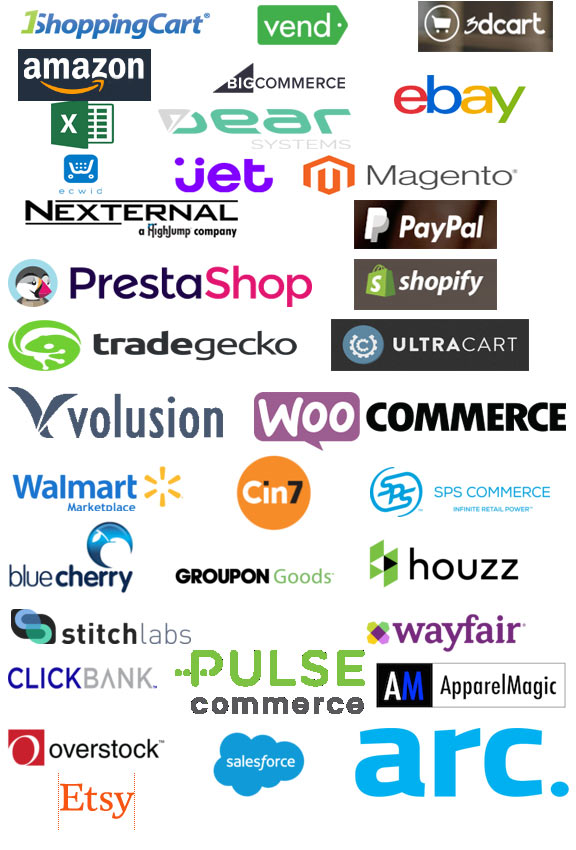
We’ve created a collage of the logos of the shopping carts that our fulfillment management software now interfaces with. These new enhancements give you more options. Here are the details.

1. Once connected to our system, orders in your shopping cart are automatically sent to Medallion’s system with no intervention on your part. It’s all automatic!

2. The automatic connection sends back inventory data to your shopping cart interface updating your on-hand counts; allowing you to better manage your ordering and inventory.

3. Shipping data from our system flows back into your shopping cart allowing customers to monitor their order status and for you to know exactly when items have shipped. It’s all automatic!

Isn’t it time for you to take another look at Medallion Fulfillment & Logistics? Call us today for a free account review.

Looking for a Reliable, Cost-Effective Service Partner?

Don’t let rate increases or poor service handcuff you to your old fulfillment provider. With Medallion Fulfillment & Logistics, you have scalable options that grow with your business. You can rely on our more than 29 years of experience providing sellers with efficient and cost-effective fulfillment services to understand your warehouse and fulfillment needs.

When Does it Make Sense for a Business to Use a Fulfillment House? When Should You Upgrade Services?

Fulfillment Warehouse Owner

Most ecommerce companies are surprised by how little third-party fulfillment costs, particularly when compared to how much they already spend to warehouse, package, and ship their own products.

Outsourcing order fulfillment is cost effective and allows you to switch variable costs to fixed costs. Gene Kent, President of Medallion Fulfillment & Logistics said, “Many times companies are surprised at the overall cost savings our services have supplied when they review their bottom-line after the first six months. As we have heavily invested in technology, both in order processing and bar coding in our warehouse, we are able to process orders faster and cheaper than you can typically do yourself.”

When you compare the total cost of order fulfillment, i.e. maintaining a warehouse, lease payments, staff, benefits, unemployment taxes, insurance etc., to an order fulfillment provider’s fixed cost model, you quickly realize that making the switch saves money. Your business can save from 20 to 50 percent on current order fulfillment expenses.

Many businesses, who are using a fulfillment house already, forget that as they grow their business needs grow, and they should review their fulfillment agreement periodically in order to add additional work and time saving services. Existing office staff may need to outsource an additional portion of the paperwork that is part of the supply chain process or move to automation for ordering in order to be efficient and handle the increase in sales volume.

Our office staff can help your business office operate more efficiently by taking on the tasks that are closely aligned with the order and shipping functions of your business.

Minimizing Errors Saves Money

A high quality order fulfillment company satisfies customers which lead to repeat business. “Our warehouse bar coding system eliminates problems. When customer merchandise is received in our warehouse it is immediately bar coded and entered into inventory. Handheld scanners are used by our packers and your inventory is tracked all the way to order shipping. We are using one of the most technologically advanced order and inventory management systems allowing business owners to review stock and order statuses of items on our system 24/7 from anywhere in the world just by using the Internet.” said Gene Kent.

Looking to Expand Your Reach?

Looking to expand beyond your current sales base? Fulfillment houses are ideal for companies seeking to sell products overseas because they have the expertise to ensure your products arrive on time and safely. If you’re seeking to expand your company’s customer base by providing customers more alternatives for ordering products and paying, don’t increase your overhead, outsource the fulfillment process.

Wholesale Orders or Business to Business Orders

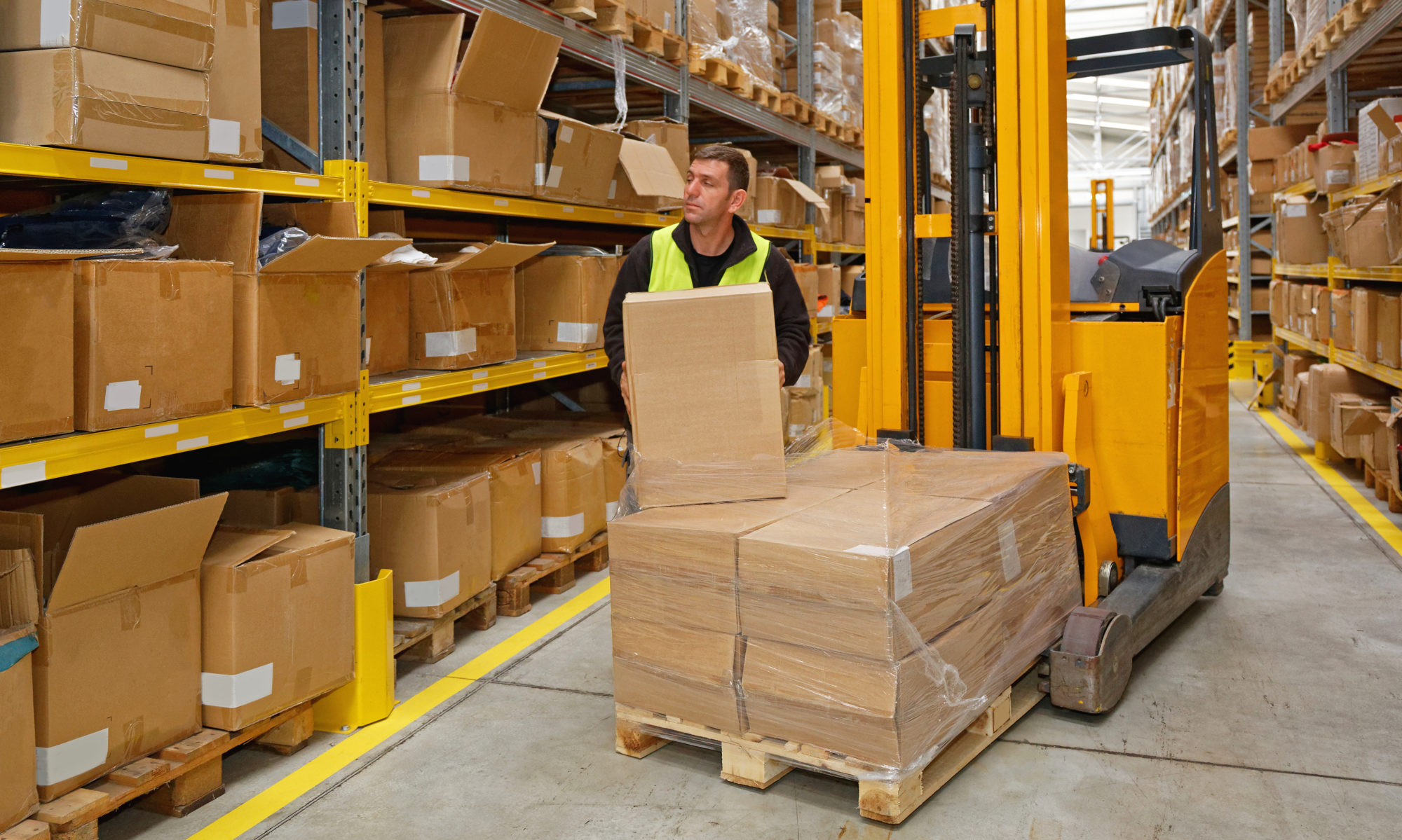
Our warehouse.As your company expands, a fulfillment company can handle your wholesale or B2B orders. Wholesale orders from large retail chains, catalogs and other mass merchants have different demands than business-to-consumer orders. The penalty for noncompliance with an order from a chain of retail stores for even something trivial, can be costly.

Fulfillment houses routinely work with wholesale orders and can develop order processing checklists for your account to assure that your orders are completed based on the requirements of the wholesaler; saving you costly charge backs.

Huge, Sudden Increase in Orders

If you’re considering adding new distribution channels or initiating major new promotions, be prepared for potentially thousands of new orders overnight. A huge increase in orders may overwhelm your back-end system; delaying shipments which leads to unhappy customers. An experienced fulfillment company knows how to properly take care of a large increase in orders. A fulfillment house allows you to ramp up very quickly without increasing your overhead.

If your company has a difficult time maintaining a balance between inventory supply and demand, a knowledgeable order fulfillment company can make a huge difference.

Foreign Companies Selling in the U.S.

Businesses based outside of the United States, partnering with a fulfillment service save time and money because they don’t need a warehouse, office and a staff in the United States; they can focus on obtaining new customers.

The Real Advantages of Partnering with a Fulfillment Service:

  • They know how to handle opportunities and problems which may occur as your business expands.
  • Only pay for fulfillment services when you generate sales.
  • Reduce fixed cost overhead.
  • No need to obtain a larger facility to store products when the business expands.
  • Bulk shipping rates available to fulfillment companies; high shipping cost can break deals with clients.
  • They buy shipping materials in bulk at better rates.
  • An active fulfillment company stays current with the latest software and order processing technology.
  • If your business experiences low volume and high volume days, fulfillment firms eliminate the employee cost associated with the fluctuation.
  • You refine and improve your backdoor operations.

Many nationally known companies reap the benefits of partnering with a third party fulfillment center. Small, medium and large businesses can do the same. With 29 years as a fulfillment service provider, Medallion Fulfillment & Logistics understands your culture, brand, and products from a depth of real world experience.

Isn’t it time to find out how you can save time and money on order processing while you work on expanding your market and sales?

About the Writer Jan Stewart

Jan Stewart is a professional writer for Medallion Fulfillment & Logistics, a family owned Los Angeles based fulfillment firm. She writes exclusively for the Medallion Fulfillment & Logistics newsletter on topics of business tips, how to promote your business online, and establishing your brand in the marketplace.

Looking Ahead: Disasters, Disruptions, and Demand – the Supply Chain Learns from Coronavirus

There are a number of ways in which coronavirus is affecting the supply chain and freight system, both long and short term. As the crisis shines a spotlight on problems with current supply chain practices, it is also shining a light on improvements that can be made.

Below are four areas to explore to minimize supply chain exposure and prevent disruption. We encourage all operations professionals to take charge of the factors they can influence and share their successes and trials with the community so that we will all be stronger after this situation passes.

1. Communication

Customers can become antsy in times of crisis, but we also see great examples of humanity during these times. Lack of information is one of the biggest obstacles to a peaceful response.

Open communication should be encouraged at all times, but none so important as times like these. Simply informing customers, clients, partners, and suppliers of delays with accuracy and honesty is essential.

Take the toilet paper crisis, for example. When consumers see only empty shelves and have no idea when supplies will be restocked, there is more panic-buying and hoarding.

However, when the store tells customers when the shelves will be restocked, there are reports of calmer buying practices and sharing. If people know that there will be more on the shelves in a few days, or can find back-in-stock dates online, they can relax a bit.

There is security in knowing, and this cannot be overemphasized as a strategy to avoid supply chain collapse.

2. Artificial Intelligence

In a recent Forbes article, Dave Evans recommends three areas for improvement to “future proof” supply chains. Two of the three areas are technology based, indicating that implementing more automation and artificial intelligence (AI) in fulfillment and logistics will have a tremendous positive impact.

Using automated data analysis helps predict demand on the fly and respond immediately and effectively. A solid dynamic AI for ERP provides actionable data insights, which enables companies to be more efficient and resilient.

When demand begins to increase slowly, the AI notices immediately and continues to re-forecast, ordering inventory earlier and more efficiently than a human purchasing agent. These AIs can continue to run regardless of human health and impact.

Evans suggests that businesses build a self-driving supply chain using blockchain, AI, machine learning and other related technologies to keep things moving on time and without delay or major disruption.

Phasing out human-dependent operations like manual spreadsheets and phone calls is another area where efficiency can be increased with the use of technology.

Automation in the fulfillment center can also help 3PLs meet increased demand with the same amount of staff, increasing flexibility. Not only is this strategy supportive of daily business and spikes in demand, but it also protects against disruptions due to labor shortage, such as a pandemic.

When staff is depleted due to natural disaster or disease, elements of the supply chain may find themselves shorthanded and in the face of increased demand at the same time. Automation relieves this strain and is not affected by the human condition.

3. Diversify Sourcing

Richard Wilding, a professor at the Cranfield School of Management, urges businesses to assess and mitigate supply chain weaknesses immediately. “Companies need to urgently review their supply chain to find out how exposed they are. They need to ask the question as to where their suppliers and suppliers’ suppliers are located and review other sourcing locations, which, although often more expensive, can protect from disruptive events such as this,” he said.

The Harvard Business Review suggests that a new kind of design is needed that enables companies to rapidly reconfigure their supply chains and be ultra-agile and responsive to rapidly changing global trade policies, supply dynamics, and disruptions.

Using local suppliers and manufacturers helps minimize disruption. When transportation breaks down, particularly overseas shipments or long-haul freight, businesses that require parts or supplies from outside the region are easily affected.

Without materials, the business may need to close temporarily, which naturally affects workers and, in turn, impacts the economic health of the community.

Sourcing locally can make a big difference and allow a business to continue producing and selling its products within the community. Of course local sourcing doesn’t fix everything.

Some products or supplies simply will not be available locally and if the transportation chain is disrupted, businesses may not be able to get their products to customers. If the local area is directly affected, this strategy will have limited success during the disruption itself, but can bounce back more quickly after the threat has passed.

In general, modern supply chain strategy should include regional diversity. Counting on a single location is too risky in the current marketplace. Experts recommend evaluating a variety of sources and considering availability, location and speed in addition to price.

It might cost a little more to source locally, for example, but there are often selling advantages to this approach.

4. Plan Ahead

Using just-in-time inventory practices is one of the best ways to minimize carrying costs in any inventory-based business. But running lean can leave you out of stock quickly in the face of increased demand.

Forecasting is already a challenge and is made more complex by an emergency situation. Some emergencies are a little predictable though, like hurricane season. Companies in the Southeastern US are accustomed to preparing for short periods of down time and shortages every year between June and November and can be ready with higher inventory levels during these times.

The first reports of COVID-19 emerged in late December 2019. While that may have been too early to react, it’s easy to see now that there have been opportunities along the way to beef up stock levels before it became a national emergency. And this is still the case.

As we all monitor this situation, there may still be opportunities to predict near-future fallout and prepare. It will take some time for businesses to recover, so consider what the next failing may be.

After toilet paper, it was paper towels and other paper goods. What might be next? In the longer term, demand may increase for sanitizing appliances or it may decrease for real estate purchases. Identifying changes early is your best weapon.

Conclusion

While we are already knee-deep in supply chain changes due to the coronavirus outbreak, it’s not too late to adjust. Even small changes can make an impact to lessen the overall negative impact on your business and your partners.

This experience can be taken as an education to inform more robust future disaster plans for supply chain management. We hope you will share your thoughts and contribute to a conversation that can benefit everyone as we move forward through this difficult time.

We invite you to find out more about Medallion Fulfillment & Logistics by visiting our website to see why we are the fulfillment leader for both the East and West Coasts.