A Small Business Owners Guide to Time Management

ecommerce store tips

Running a small business can feel like juggling while riding a bike. I should know— I’ve been operating my 3PL fulfillment warehouse for over a decade. Time management isn’t just helpful; it’s essential for survival.

The 80/20 Rule in Action

Twenty percent of your activities generate 80% of your results. In my 3PL business, I discovered that client relationship management and warehouse optimization drove most of my revenue. Everything else was secondary.

Focus on your high–impact activities first. For most business owners, this means sales, strategic planning, and team development.

Calendar Blocking That Actually Works

Block your calendar like your business depends on it–because it does. I dedicate Monday mornings to warehouse operations review, Tuesday afternoons to client calls, and Friday mornings to strategic planning.

Color–code your blocks: red for urgent tasks, blue for client work, green for business development. This visual system helps you maintain balance and spot potential problems before they explode.

Smart Delegation and Outsourcing

You can’t do everything yourself. I learned this the hard way when I tried to handle every aspect of my fulfillment warehouse operations. Now I delegate inventory management to my team lead and outsource accounting to professionals.

Consider which tasks drain your energy without adding significant value. Administrative work, data entry, and routine customer service inquiries are perfect candidates for delegation.

Technology Tools That Don’t Overwhelm

Skip the fancy systems initially. Start with three essential tools: a calendar app, a task manager, and a communication platform. I use Google Calendar, and Slack. Simple, effective, and my team actually uses them.

Avoiding Time Traps

Meetings kill productivity. Before scheduling any meeting, ask: “Could this be an email?” If yes, send the email. When meetings are necessary, set clear agendas and time limits.

Social media checking becomes addictive fast. Set specific times for business–related social media activities and stick to them.

Maintaining Your Sanity

Burnout destroys good decision–making. Set boundaries between work and personal time. I stop checking business emails after 7 PM and take Sundays completely off. My 3PL runs better when I’m rested and focused.

Your Next Steps

Start small. Pick one strategy from this article and implement it this week. Track your results and adjust as needed.

Running a successful business requires systems, not just hustle. If inventory management and order fulfillment are consuming too much of your valuable time, explore 3PL fulfillment services that can handle these operations while you focus on growing your business.

Time is your most precious resource. Invest it wisely.

The Glitter Bomb Heard ‘Round the World: A TikTok Shop Saga

TikTok Shop Fulfillment story by Medallion Fulfillment

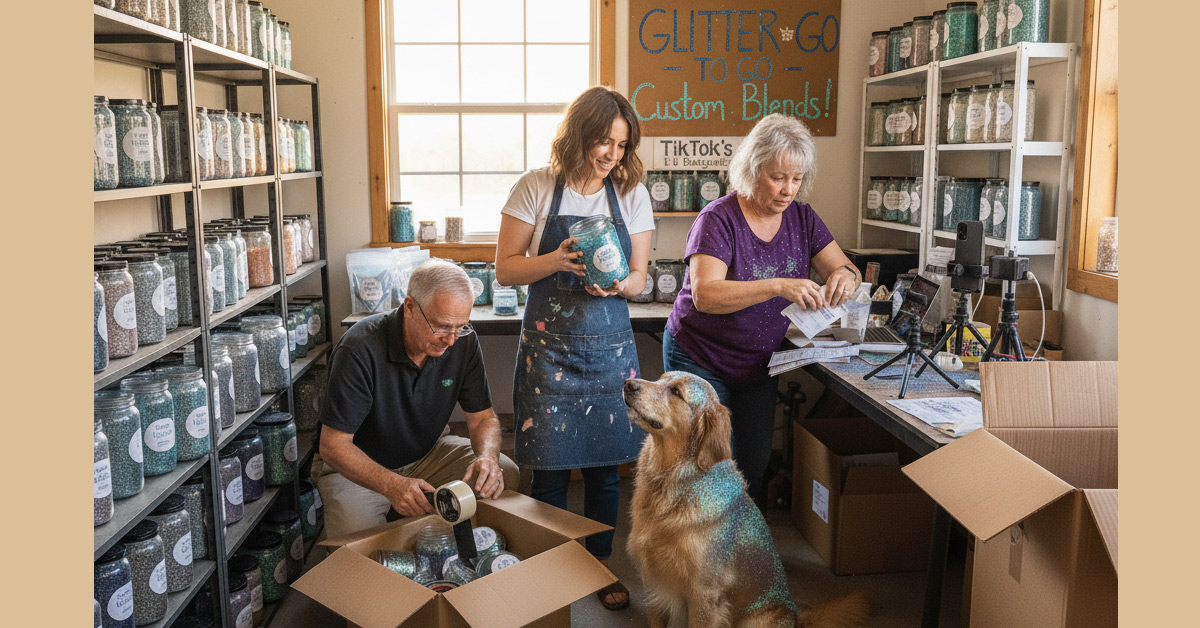
Meet Chloe. At 24, she’s the proud owner of “Glitter to Go,” a TikTok Shop that sells custom-blended, biodegradable craft glitter. What started as a quirky hobby in her parents’ garage quickly exploded into a viral sensation. One video of a cat accidentally knocking over a jar of her “Stardust Sea” blend, creating what looked like a shimmering galaxy on the floor, got 10 million views. Orders started pouring in.

At first, it was fun. Chloe, her mom, her dad, and two of her best friends formed an impromptu assembly line in the living room. They called themselves the “Glitterati.” Dad was on box assembly, Mom was the master packer (no one could fold tissue paper like her), and her friends handled labeling and taping. Chloe managed the orders, printed the labels, and kept everyone supplied with pizza and morale.

But the viral fame didn’t stop. Chloe’s shop was featured in a major influencer’s “Favorite Finds” video, and suddenly, the orders went from hundreds a day to thousands. The Glitterati were no longer glittering.

From Living Room Chaos to Family Mutiny

The living room looked less like a home and more like a glitter-fueled disaster zone. Cardboard boxes formed precarious towers that threatened to topple with every footstep. The family dog, a golden retriever named Gus, was permanently sparkling. Chloe’s dad, a retired accountant, had developed a nervous twitch every time he heard the sound of packing tape.

The breaking point came on a Tuesday. After a 14-hour packing marathon, fueled by lukewarm coffee and the last of the stale donuts, Chloe’s mom put down her tape gun. She had a streak of “Unicorn Dream” glitter across her forehead and a look of sheer exhaustion in her eyes.

“Honey,” she said, her voice gentle but firm. “I love you, and I love that your business is a success. But I found a sequin in my salad today. Your father is seeing shipping labels in his sleep. We can’t do this anymore.”

It was a full-blown, albeit very polite, family mutiny. Chloe’s friends had already bowed out gracefully, citing the need to, you know, have lives. She was on her own, staring at a mountain of unfulfilled orders and the very real possibility of her five-star rating taking a nosedive.

The Hunt for a Fulfillment Hero

Chloe knew she needed help. Professional help. She needed a fulfillment partner. Her search began with a frantic late-night Googling session. She pictured massive, impersonal warehouses where her lovingly crafted glitter would become just another SKU in a sea of products. She worried about costs, contracts, and losing the personal touch she had worked so hard to build.

Her needs were specific:

Affordability: She was profitable, but she wasn’t Jeff Bezos. The pricing had to make sense for a growing small business.

Flexibility: Her sales were spiky. One viral video could mean a 500% increase in orders overnight. She needed a partner who could scale with her, not penalize her for sudden success.

Nationwide Coverage: Her customers were everywhere, from Miami to Seattle. Shipping from her parents’ house in Ohio was slow and expensive for coast-to-coast orders. She dreamed of two-day shipping.

That’s when she found us. With our bicoastal warehouses in Los Angeles and Boston, we immediately stood out. She saw the potential to slash her shipping times and costs by strategically splitting her inventory between our two locations. A customer in California could get their order from our LA facility in a day or two, while a customer in Maine could get theirs just as quickly from Boston.

How We Helped Chloe Reclaim Her Sanity (and Her Living Room)

Chloe scheduled a call, half-expecting a high-pressure sales pitch. Instead, she got a partner. We listened to her story (we’ve heard many like it!) and understood her panic. We didn’t just see a spreadsheet of order volume; we saw a passionate entrepreneur who needed a lifeline.

Here’s how we solved Chloe’s glitter crisis:

Step 1: A Simple, Transparent Plan

We walked her through a clear, easy-to-understand pricing model with no hidden fees. We showed her exactly how much it would cost to store her products and fulfill her orders. We even ran a cost simulation based on her previous month’s sales, demonstrating how our bicoastal model would save her an average of 18% on shipping costs compared to shipping everything from a single, central location. The numbers made sense. Chloe’s dad, the retired accountant, even gave it a nod of approval.

Step 2: Seamless Onboarding

Getting Chloe’s “ShimmerPop Creations” into our system was a breeze. Our platform integrated directly with her TikTok Shop. Within a couple of hours, her products were synced, and we were ready to receive her inventory. We coordinated the freight shipment from her parents’ garage—a day of celebration for her family, who threw a “Goodbye, Boxes!” party. We handled the receiving and stocking, splitting her inventory intelligently between our Los Angeles and Boston locations based on her sales data.

Step 3: Fast, Reliable Fulfillment

The moment a new order hit Chloe’s shop, our system got to work. The order was automatically routed to the closest warehouse. Our team picked, packed, and shipped it, often on the same day. Chloe could watch it all happen from her dashboard, feeling a sense of calm she hadn’t felt in months.

The best part? Her customers noticed. Her reviews started filling up with comments like, “Wow, that was fast!” and “I ordered this two days ago and it’s already here!” Her five-star rating was secure.

The Happily Ever After

Today, Chloe’s business is bigger than ever. She’s expanded her product line to include glitter-infused craft paints and DIY kits. She spends her time not on packing boxes, but on creating content, dreaming up new products, and engaging with her community. She’s a CEO, not a shipping clerk.

Her parents have their living room back, and Gus the dog is no longer a walking disco ball (mostly). Chloe’s mom still occasionally puts a pinch of “Stardust Sea” in her greeting cards for a personal touch, but her tape-gun days are over.

Chloe’s story is a perfect example of what happens when a great product meets the right operational support. You don’t have to sacrifice your family, your sanity, or your living room to build a successful e-commerce brand. You just need a partner who can handle the logistics, so you can focus on the magic.

Although this is a fictional case study, it is an illustration of what we do and how we do it. If you have an exploding TikTok Shop, Medallion Fulfillment & Logistics is ready to step in and relieve your “Glitterati” and make life easier for you to focus on what you do best – making great TikTok videos that drive even more business.

Find out how Medallion Fulfillment & Logistics can help you today!
Medallion Fulfillment vs. Amazon FBA: Which is Best?

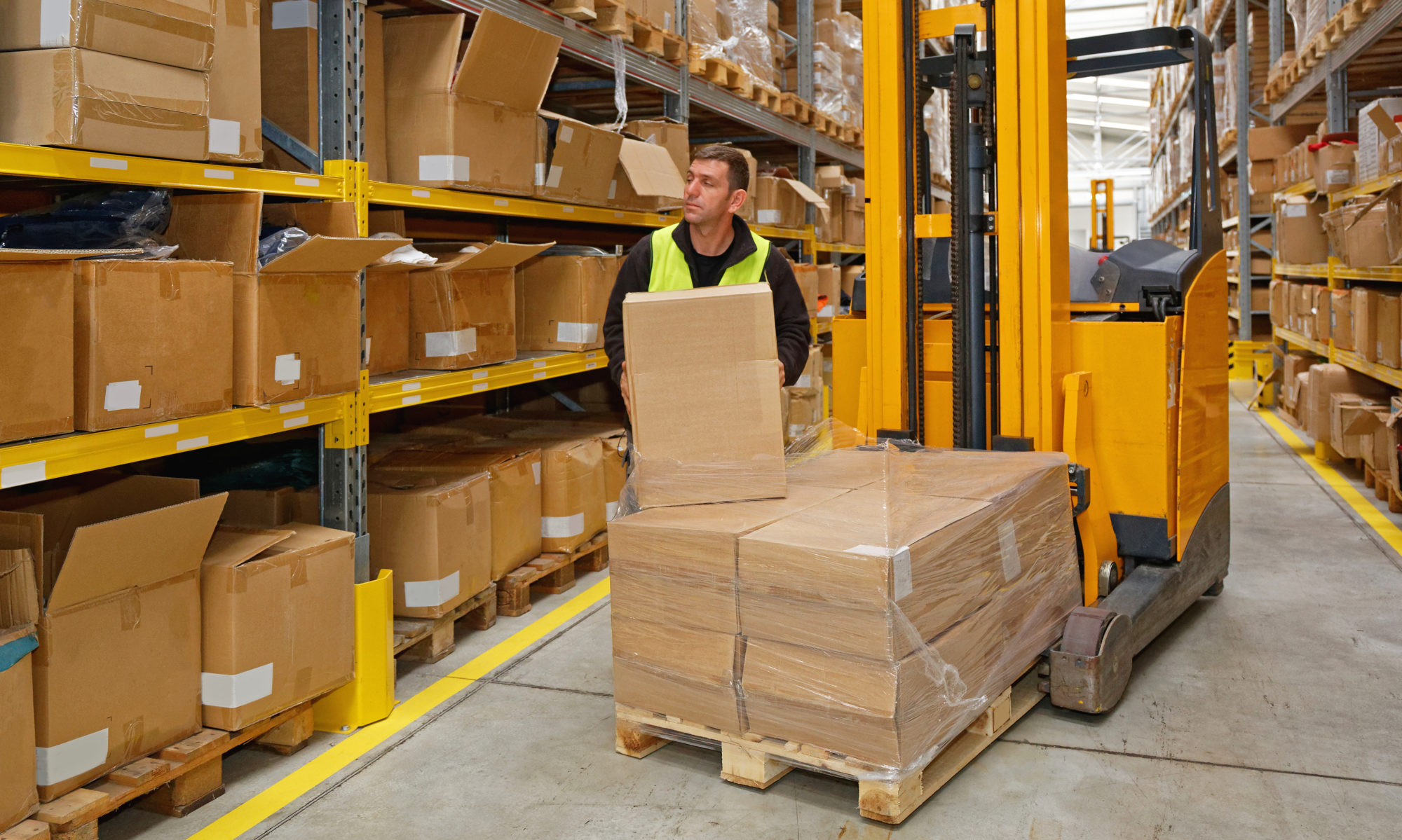
Fulfillment Partner Putting Orders Together

As a business owner, choosing the right fulfillment partner is one of the most critical decisions you’ll make. The way your products are stored, packed, and shipped directly impacts customer satisfaction and your bottom line. Two popular options are partnering with a third-party logistics (3PL) provider like Medallion Fulfillment or using Amazon FBA. While both get your product to the customer, they offer very different experiences.

Let’s break down the key differences to help you decide which path is the right one for your business’s growth.

The Power of Amazon FBA

Fulfilled by Amazon (FBA) is a powerhouse for a reason. By storing your inventory in Amazon’s warehouses, you gain access to its world-class logistics network.

The biggest advantages include:

  • Prime Badge: Products sold through FBA are eligible for the Amazon Prime badge, offering customers fast, free shipping. This is a massive conversion driver on the Amazon marketplace.
  • Hands-Off Logistics: Amazon handles everything from picking and packing to shipping and customer service inquiries, including returns. This frees up your time to focus on sales and marketing.

However, these benefits come with significant trade-offs that can hinder a growing brand.

The Limits of Amazon’s Approach

Amazon FBA operates on a massive scale, which creates rigidity and a lack of personalization that can be challenging for small to medium-sized businesses.

The main drawbacks are:

  • Complex and High Fees: FBA’s fee structure is notoriously complicated. You’ll face fulfillment fees, monthly storage fees, long-term storage penalties for slow-moving inventory, and various other charges. These costs can be unpredictable and quickly reduce your profit margins.
  • No Branding Control: Every order ships in an Amazon-branded box. You lose a crucial marketing opportunity to create a memorable unboxing experience that reinforces your brand identity and encourages customer loyalty.
  • Strict Requirements: FBA has inflexible rules for labeling, packaging, and receiving inventory. Failing to meet these standards can result in penalties or refusal of your shipment, causing costly delays.

The Medallion Advantage: A Partnership for Growth

Working with a dedicated fulfillment partner like Medallion Fulfillment offers a fundamentally different, more personalized approach. We act as an extension of your team, providing the flexibility and control you need to build your brand.

Cost Control and Predictable Pricing

Unlike the complex fee structure of FBA, we provide clear, straightforward pricing. You get a transparent view of your fulfillment costs without worrying about hidden charges or long-term storage penalties. This predictability allows for better financial planning and protects your margins, helping you scale your business sustainably.

Enhance Your Brand with Custom Packaging

We believe the customer experience shouldn’t end at checkout. Medallion empowers you to own the post-purchase journey.

  • Custom Branded Boxes: Ship your products in packaging that reflects your brand’s unique identity.
  • Promotional Inserts: Include thank-you notes, special offers, or other marketing materials to delight customers and drive repeat business.
  • Personalized Service: Create a memorable unboxing experience that transforms a simple delivery into a powerful brand touchpoint.

Flexible Solutions and Dedicated Support

Your business is unique, and your fulfillment solution should be too. We don’t believe in a one-size-fits-all model. Our team works with you to understand your specific needs and tailor our services accordingly. When you have a question or need to make a change, you can speak directly with a dedicated support contact who knows your business—a level of personalized service you simply won’t find with FBA.

Making the Right Choice for Your Business

Amazon FBA is an effective solution if you sell exclusively on the Amazon marketplace and want a hands-off approach.

However, if you are building a brand, selling across multiple channels, and value cost control and the customer experience, a fulfillment partner is the superior choice. Medallion Fulfillment provides the tailored solutions and expert support needed to help your business thrive.

Ready to take control of your fulfillment and build a stronger brand? Contact us at Medallion Fulfillment & Logistics to learn more about our customized, cost-effective solutions.

Tips for Fulfilling a One Time Shipment like Kickstarter

Kickstarter Success! DIY shipping or Hire a Fulfillment Company?

Fulfillment Company: DIY vs. 3PL

Congratulations, your Kickstarter campaign was a success! While the funds are rolling in and the social media congratulations are buzzing, you’re facing the next big challenge: fulfilling your promises. For many creators, the most difficult part of a crowdfunding campaign isn’t raising the money; it’s delivering the product to your backers.

Manufacturing, shipping, and handling thousands of orders can be overwhelming. This guide will help you understand the two main approaches to Kickstarter fulfillment—doing it yourself or partnering with a third party logistics provider or fulfillment company—so you can make the best choice for your project.

Understanding Kickstarter Fulfillment

Before you can ship a single product, you need a solid plan. Successful fulfillment starts long before your campaign ends. It requires careful planning and budgeting to ensure you can meet your backers’ expectations without eating into your profits.

One of the biggest mistakes first-time creators make is underestimating costs. Your budget needs to account for more than just manufacturing. Remember to factor in platform fees (which can be 8-10% of your total funding), payment processing, packaging materials, and shipping. It’s crucial to build a financial buffer to cover unexpected expenses like shipping damages or production delays.

The DIY Fulfillment Approach

Managing fulfillment in-house means you handle every aspect of the process, from storing inventory and packing boxes to printing labels and shipping orders. This hands-on approach is often the default for smaller campaigns.

Advantages of DIY Fulfillment

  • Total Control: You oversee every detail, ensuring the packaging and presentation align perfectly with your brand. You can add personal touches like handwritten notes to create a memorable unboxing experience.
  • Direct Backer Relationship: Handling fulfillment yourself keeps you directly connected to your supporters. This can be a valuable learning experience, offering insights into your customer base.
  • Lower Upfront Costs: You avoid the fees associated with a fulfillment partner, which can be appealing if your budget is tight.

Challenges of DIY Fulfillment

  • Massive Time Investment: Packing and shipping hundreds or thousands of orders is a monumental task. This can easily become a full-time job, pulling you away from other critical business activities.
  • Space Requirements: You’ll need a dedicated space to store your inventory and set up a packing station. For many, this means turning a garage or living room into a temporary warehouse.
  • Potential for Errors: Without established systems, the risk of making mistakes—like sending the wrong item or using incorrect postage—is high. International shipping adds another layer of complexity with customs forms and regulations.

The 3PL Fulfillment Approach

A third-party logistics provider (3PL), or fulfillment company, handles your storage, packing, and shipping for you. You send your manufactured products to their fulfillment center, and they take care of the rest.

What is a 3PL?

A 3PL provider acts as your outsourced operations department. Their services typically include warehousing, inventory management, order processing, and shipping. At Medallion Fulfillment, we have extensive experience managing special orders and kitting, ensuring that even complex rewards with multiple items are assembled and shipped correctly.

Advantages of 3PL Fulfillment

  • Focus on Your Core Business: Outsourcing logistics frees you up to concentrate on what you do best—developing new products, marketing your brand, and growing your business.
  • Scalability: A fulfillment company is equipped to handle large order volumes. If your campaign is more successful than anticipated, a 3PL can easily scale to meet the demand.
  • Shipping Expertise and Better Rates: 3PLs ship in high volumes, which allows them to negotiate better shipping rates with carriers than a small business could get on its own. They are also experts in navigating the complexities of international shipping and customs.

Challenges of 3PL Fulfillment

  • Cost: Partnering with a 3PL involves service fees. While you save on shipping, you need to budget for costs related to storage, order processing, and packing.
  • Less Direct Control: While you still control your brand, you give up direct oversight of the packing and shipping process. This is why choosing a trusted partner is so important.

Choosing the Right Fulfillment Model

So, should you go the DIY route or hire a 3PL? The right answer depends on several factors:

  • Scale and Volume: For projects with a small number of backers (e.g., under 200) and simple rewards, DIY can be manageable. For larger campaigns, especially those with significant international orders, a 3PL is often the better choice.
  • Budget: While DIY seems cheaper upfront, the hidden costs of time, materials, and potential errors can add up. A 3PL has clear costs, but you must ensure they fit within your budget.
  • Your Expertise and Time: Be honest about how much time you can dedicate to fulfillment. If you’re already juggling other responsibilities, outsourcing to a third party logistics expert can be a lifesaver.

When evaluating 3PL providers, look for a partner with experience in crowdfunding campaigns and the flexibility to handle unique requirements like kitting and assembly.

Key Steps in the Fulfillment Process

No matter which model you choose, the core steps remain the same:

  1. Manufacturing Oversight: Keep in close contact with your manufacturer to ensure production stays on schedule and meets your quality standards.
  2. Transportation: Arrange for your finished goods to be shipped from the factory to your home or your 3PL’s fulfillment center.
  3. Pledge Management: Use a tool like BackerKit to collect final shipping addresses from your backers. It’s best to do this just before you’re ready to ship to avoid issues with outdated addresses.
  4. Communication: Keep your backers informed every step of the way. Regular, transparent updates build trust and patience, especially if there are delays.

Finding Your Fulfillment Balance

Successfully fulfilling your Kickstarter campaign is a balancing act between cost, control, and customer satisfaction. The DIY approach offers maximum control but demands significant time and effort. A 3PL provider offers expertise and scalability, allowing you to focus on your business while ensuring your backers receive their rewards efficiently.

By carefully planning your fulfillment strategy from the beginning, you can turn the challenge of delivery into an opportunity to build lasting relationships with the supporters who brought your project to life.

Ready to take the stress out of shipping? Let the experts at Medallion Fulfillment & Logistics handle the details.

Get a Free Fulfillment Quote

How 3PLs Empower DTC Brands to Scale Faster Pt 2

Third Party Logistics Provider for DTC (Direct to Consumer Ecommerce)

Direct-to-consumer (DTC) brands are rewriting the rules of retail—building loyal communities, controlling their messaging, and delivering curated experiences. But as orders grow and customer expectations rise, fulfillment becomes a bottleneck. That’s where third-party logistics (3PL) providers step in—not just as operational support, but as strategic accelerators. If you didn’t catch part one of this article you can find it here.

Four Key Benefits of 3PL Partnerships

Cost Reduction Through Operational Efficiency

3PL providers achieve economies of scale that individual brands cannot match. By consolidating shipments and leveraging established carrier relationships, they secure better shipping rates. Medallion Fulfillment’s bulk shipping agreements result in significant savings that we pass directly to our clients.

Storage optimization reduces warehousing costs through efficient space utilization and shared infrastructure. Instead of paying for dedicated warehouse space year-round, brands only pay for the storage they actually use.

Enhanced Focus on Core Business Activities

When logistics operations move to experienced 3PL providers, internal teams can redirect energy toward revenue-generating activities. Marketing campaigns, product development, customer service, and strategic partnerships all benefit from increased attention and resources.

This refocusing often accelerates growth beyond what improved fulfillment efficiency alone could achieve. Brands that outsource ecommerce fulfillment typically see faster product launch cycles and more aggressive market expansion.

Improved Customer Experience and Satisfaction

Professional 3PL operations deliver consistently superior customer experiences. Order accuracy rates typically exceed 99.8%, while shipping times often improve by 2-3 days compared to in-house operations.

Advanced tracking systems keep customers informed throughout the fulfillment process, reducing support inquiries and increasing satisfaction. When issues do arise, experienced 3PL teams resolve them quickly without involving brand resources.

Scalability Without Operational Complexity

3PL partnerships eliminate the need to forecast warehouse capacity, hire seasonal staff, or invest in additional fulfillment infrastructure. During peak seasons or promotional periods, your 3PL automatically scales operations to meet demand.

This flexibility proves especially valuable for DTC brands with seasonal products or those experiencing rapid, unpredictable growth. You can focus on driving sales without worrying about fulfillment capacity constraints.

Success Stories: DTC Brands That Scaled With 3PLs

Several household-name DTC brands have leveraged 3PL partnerships to achieve remarkable growth:

Warby Parker revolutionized eyewear retail through their direct-to-consumer model, but their success required efficient distribution to compete with traditional optical chains. Strategic 3PL partnerships enabled rapid geographic expansion while maintaining their distinctive customer experience.

Glossier built a devoted following around minimalist beauty products and community-driven marketing. As order volumes exploded, partnering with experienced 3PLs allowed them to maintain fast shipping and branded packaging without diverting resources from product development and customer engagement.

Allbirds gained popularity through sustainable footwear and transparent business practices. Their complex supply chain and global shipping requirements made 3PL partnerships essential for maintaining their ethical standards while scaling internationally.

Casper transformed the mattress industry with their bed-in-a-box concept, but shipping large, bulky products required specialized logistics expertise. 3PL partnerships enabled reliable delivery of their innovative packaging while supporting rapid market expansion.

Choosing the Right 3PL Partner

Success depends on selecting a 3PL provider that understands DTC brand needs and can grow alongside your business. Look for partners offering seamless technology integration, transparent pricing, and experience serving similar brands.

At Medallion Fulfillment, we specialize in supporting DTC brands through every growth stage. Our scalable services, strategic warehouse locations, and flat-rate fulfillment programs for startups provide the flexibility growing brands need. Whether you’re shipping 100 orders per month or 10,000 per day, our systems and expertise adapt to your requirements.

Transform Your Fulfillment Into a Competitive Advantage

The most successful DTC brands treat fulfillment as a strategic capability, not just an operational necessity. 3PL partnerships enable this transformation by providing professional operations, advanced technology, and scalable infrastructure—freeing you to focus on what you do best.

Don’t let fulfillment bottlenecks limit your growth potential. Contact Medallion Fulfillment today to start your third party logistics for ecommerce partnership and discover how professional fulfillment services can accelerate your DTC brand’s success.